White and Metal Colors in Feng Shui: Clarity and Precision
White, silver, and gold are metal's colors, and they are the colors of clarity. In feng shui, they stand for precision, order, clean boundaries, and clear thinking — the energy of a freshly cleaned room, a blank page, a well-organized desk. Used well, they make a home feel bright, spacious, and easy to think in. Used without warmth, they make a home feel sterile, cold, and unwelcoming. This guide is about getting the balance right.
Metal colors work by reflection. White reflects light, which is why white rooms feel larger and brighter. Silver and chrome reflect images and light sharply, which is why they feel precise. Gold reflects warmly, which is why it feels rich. Together they are the palette of clean light — and clean light is the point. A room in metal colors should feel like a clear morning, not like a hospital corridor. The difference, as always, is what you pair them with.
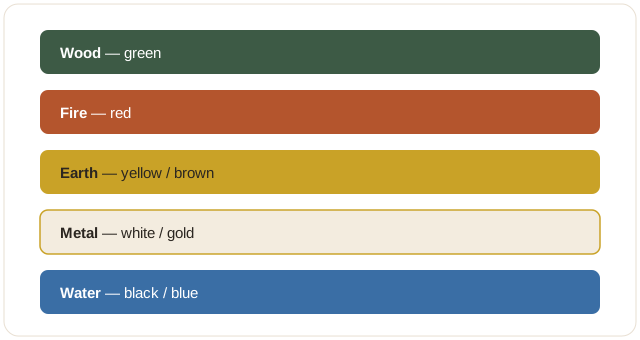
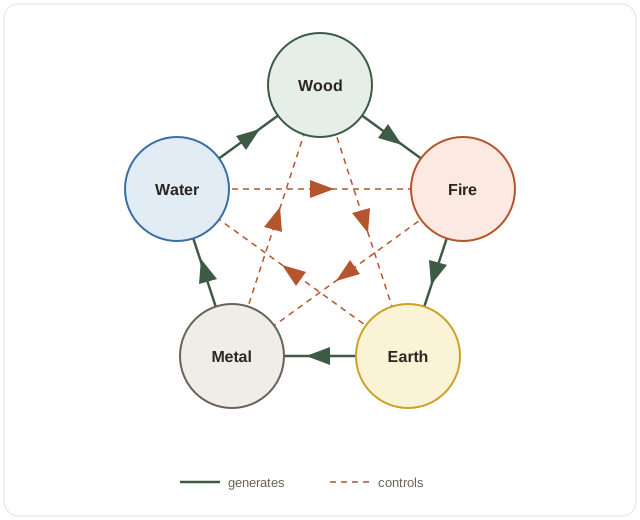
Metal's cycle governs these colors: earth feeds metal, so yellow and brown support white and gold; metal feeds water, so white and gold support blue and black; fire controls metal, so red and warm light soften them; metal controls wood, so white and gold trim green back. Metal's bagua homes are the west (Creativity and Children) and the northwest (Helpful People). The metal element guide covers the element in full; this guide is about its colors.
Warm white versus cool white: the choice that decides everything
The single most important decision in a white room is warm versus cool white, and most people make it by accident. Warm white has a yellow or cream undertone. It suits living rooms, bedrooms, and dining rooms, where the goal is comfort. Cool white has a blue or grey undertone. It suits bathrooms, kitchens, and workspaces, where the goal is cleanliness and alertness. Painted in the wrong room, each feels wrong: warm white in a bathroom can look dingy, and cool white in a bedroom can feel cold.
The test is easy. Hold the paint sample against a sheet of plain white printer paper in daylight. If the sample looks yellow or creamy beside the paper, it is warm. If it looks blue or grey, it is cool. Do this in the room itself, not in the shop, because shop lighting lies. And test at two times of day: a white that looks perfect at noon can look grey or yellow in the evening under artificial light. The wrong white is the most common reason a pale room feels off, and it is fixed before you buy, not after you paint.
Off-whites and pale greys deserve a mention, because most "white" rooms are actually one of these. Cream, ivory, and warm pale grey are more forgiving than pure white: they hide marks better, they feel softer, and they pair more easily with wood and textiles. Pure brilliant white is best reserved for trim, ceilings, and rooms with abundant light. If your room is small or dark, a warm off-white will look better than a stark white, because stark white in dim light looks grey anyway.
Silver, chrome, and gold: metal's accents
Silver and chrome are metal in its most literal color form: cool, sharp, and precise. Chrome taps, stainless steel appliances, silver frames, a chrome lamp — these are the details that make a kitchen or bathroom feel clean and modern. They work best as fittings and accents, not as large surfaces. A room full of chrome and glass reflects sound as well as light, and it can feel echoing and hard. Pair chrome with textiles — towels, a rug, a curtain — to soften the acoustics.
Gold is metal's warm accent, and it is the antidote to white's coldness. Brass and gold add a warm gleam that white alone cannot provide: a brass lamp base, a gold-framed mirror, brass handles on a cabinet, a gold-rimmed bowl. Gold works in small doses — three or four touches per room is plenty. A room full of gold looks like a showroom; a room with a few brass details looks considered and warm. In traditional feng shui, gold also carries an association with value and reward, but the practical effect is simpler: it warms a pale room the way sunlight warms a white wall.
Mixing silver and gold used to be a decorating taboo, and it no longer is. A room can hold both if one dominates: mostly silver with a brass lamp, or mostly brass with a chrome tap. What looks wrong is an equal, unconsidered mix of both everywhere, which reads as indecision rather than choice. Pick a dominant metal for the room's fittings and let the other appear once or twice as an accent.
White room by room
Living rooms suit warm white walls with wooden floors and soft textiles. The white gives light and space; the wood and textiles give warmth. A white living room with no wood and no textiles is the classic sterile room — fix it with a rug, a wooden coffee table, or a soft throw before repainting anything. The living room guide shows how seating and rugs anchor a pale room.
Kitchens suit cool white or pale grey, because cleanliness is the point and kitchens are workspaces. White cabinets, a white or pale stone counter, and stainless steel appliances are a natural metal combination. Warm a white kitchen with wood — a chopping board, a wooden bowl, a herb plant — so it feels like a place people cook in, not a laboratory. The kitchen guide covers the fire-water balance that matters more than color alone.
Bedrooms suit warm white and cream, with soft bedding and warm lighting. A white bedroom can be beautifully calm, but a bedroom that is all white, chrome, and glass feels too sharp for sleep. Soften it with warm bedding, a wooden bedside table, and a rug beside the bed. Bathrooms suit cool white and pale grey with chrome fittings — the cleanest combination — warmed by a wooden stool, a woven basket, or a warm towel.
Home offices are metal's best room for white: white walls, a clean desk, and clear surfaces support focused work. But an office that is entirely white can feel blank and uninspiring. Add one warm element — a wooden desk accessory, a brass lamp, a piece of art with color — so the room supports both focus and creativity. The home office guide covers desk placement; white is the color layer that keeps the desk feeling clear.
When white goes wrong, and the metal-star connection
White goes wrong in three ways. The first is the wrong undertone for the room, solved by testing samples in your own light. The second is no warmth anywhere — no wood, no textiles, no warm light — solved by adding one or two warm elements rather than repainting. The third is impracticality: brilliant white in a high-traffic hallway, a child's room, or a home with pets will show every mark, and a marked white room feels dirtier than a marked colored room. In high-traffic areas, choose a warm off-white or pale grey that forgives marks, and save brilliant white for ceilings and trim.
Metal colors also have a special job with the annual stars. When a sector holds a heavy earth star — the 5 Yellow in the north in 2027 and the southwest in 2028, or the 2 Black in the west in 2027 and the northeast in 2028 — white, silver, and gold are the traditional remedy, because earth feeds metal and the metal drains the heaviness. A white wall, a metal bowl, or gold accents in those sectors are practical, attractive remedies that need no special purchase. Check the 2028 chart for the sector details (the 2027 chart follows the same pattern). Metal colors' gift is clarity: used with warmth, they make a home feel bright, ordered, and easy to breathe in.
Go deeper with the book
Feng Shui Made Simple covers every room this way — bedroom, living room, kitchen, office, entryway — with diagrams and a 7-day plan for doing the whole house.
Frequently asked questions
What are metal colors in feng shui?
White, silver, and gold. They stand for clarity, precision, order, and clean boundaries, and they work by reflecting light — which is why white rooms feel larger and brighter.
Should I choose warm white or cool white?
Warm white (yellow or cream undertone) suits living rooms and bedrooms; cool white (blue or grey undertone) suits bathrooms, kitchens, and workspaces. Test samples against plain white paper in the room itself, at two times of day.
Can I mix silver and gold in one room?
Yes, if one dominates. Mostly silver with one brass lamp, or mostly brass with one chrome tap, looks considered. An equal, unconsidered mix of both everywhere reads as indecision.
Why does my white room feel sterile?
Usually there is no warmth anywhere — no wood, no textiles, no warm light. Add a rug, a wooden piece, or a warm lamp before repainting; the paint is rarely the problem.
Do metal colors help with the 5 Yellow star?
Yes. Earth feeds metal, so white, silver, and gold drain the heaviness of earth stars. In 2027 the 5 Yellow is in the north; in 2028 it is in the southwest.