Metal Element at Home: White, Round Shapes, and Clarity
Metal is the element of autumn and of clarity. In the five-element system it stands for precision, order, clean boundaries, and clear thinking — the energy of a sharp knife, a well-organized desk, a room where everything has its place. At home, metal shows up as white, gold, and silver tones, round shapes, and metal objects themselves: frames, bowls, lamps, bells. Used well, it makes a room feel crisp and calm. Used coldly, it makes a room feel like a clinic.
Metal's role in the cycle explains most of its uses. Earth feeds metal, metal feeds water, fire controls metal, and metal controls wood. That gives you two practical rules. First, metal is the natural way to drain excess earth: when a sector holds a heavy earth star, metal tones are the traditional remedy, because earth produces metal and the metal draws the heaviness away. Second, metal is the way to trim excess wood: a room overgrown with plants and green feels pruned back by white walls, round metal frames, or a metal sculpture.
Metal's colors are white, silver, gold, and pale grey. Its shape is the circle and the arch. Its materials are all metals — stainless steel, brass, copper, iron — and also white ceramics and glass, which share metal's crisp, clean quality. Its bagua homes are the west (Creativity and Children) and the northwest (Helpful People). The five elements guide covers the full cycle; this guide is about using metal in real rooms.
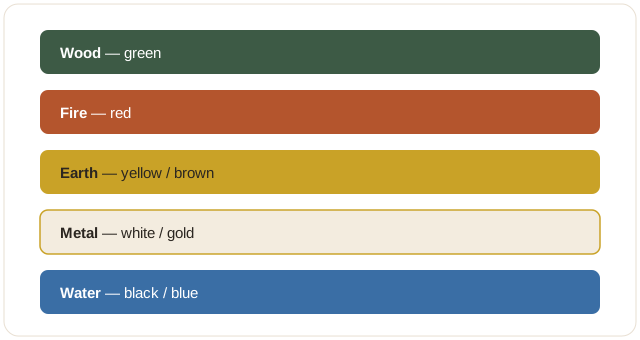
White done well: the difference between crisp and cold
White is metal's main color, and it is the most misused color in modern homes. A white room with warm light, wooden floors, and soft textiles feels crisp and calm. The same white room with cold light, hard floors, and no textiles feels like a laboratory. The difference is not the paint; it is everything around it. If your white room feels cold, the fix is rarely repainting — it is warming the light, adding a rug, a wooden piece, or a soft throw.
Warm white and cool white are genuinely different colors. Warm white has a yellow or cream undertone and suits living rooms and bedrooms. Cool white has a blue or grey undertone and suits bathrooms and kitchens, where cleanliness is the point. Hold a paint sample next to a sheet of plain white paper in daylight: if the sample looks yellow beside the paper, it is warm; if it looks blue or grey, it is cool. Choosing the wrong one is the most common reason a white room feels wrong, and it is fixed at the paint shop, not with decorations.
Gold is metal's warm accent, and it does what white cannot: it adds richness without adding weight. A brass lamp, a gold-framed mirror, a brass bowl on a table — each adds a small warm gleam that keeps a metal room from feeling sterile. Use gold sparingly, as an accent rather than a theme. A room full of gold looks like a showroom; a room with three or four brass touches looks considered.
Round shapes and metal objects
Round shapes carry metal energy quietly. A round mirror, a round clock, a circular rug, an arched doorway, a round dining table — each adds metal without adding a single white wall. This is useful in rooms that need clarity but cannot take more white, like a room that is already pale. A round mirror in a hallway, for instance, adds metal and bounces light at the same time. The mirrors guide covers placement rules, including the important rule to keep mirrors off the wall facing a bed.
Metal objects themselves are the most direct metal cure. A metal wind chime, a brass bell, a stainless steel bowl, a metal lamp base, a set of metal picture frames — all of these are metal in its literal form. Wind chimes deserve a note: they are both metal and sound, and the wind chimes guide explains where they help and where they only add noise. In general, one or two metal objects per room are enough. A room full of metal objects feels hard and echoing, literally — metal surfaces reflect sound as well as light.
Sound is metal's hidden sense. Metal is the element of bells, chimes, and clear tones. A room that needs metal sometimes needs sound more than objects: a small bell by the door, a wind chime in a hallway, music played clearly rather than muffled. This is also why a metal-heavy room can feel noisy: hard metal and glass surfaces bounce sound around. If a room echoes, soften it with textiles before adding more metal.
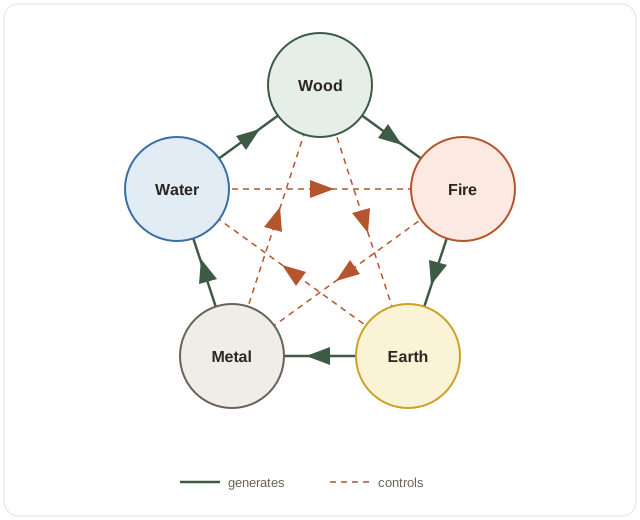
Where metal belongs, room by room
Metal belongs in the west and northwest, and in any room where clarity and order are the point. A home office is metal's best room: white walls, a clean desk, metal filing, a round clock, and clear surfaces all support focused work. The home office guide shows how to keep a desk clear without making it feel bare. A bathroom also suits metal, because cleanliness and order are the whole point of the room, and white tiles and chrome fittings are already metal.
Kitchens are naturally metallic, with stainless steel appliances, sinks, and utensils. That is fine, but a kitchen that is entirely steel and white can feel cold and unwelcoming. Warm it with wood — a wooden chopping board, a herb plant, a wooden bowl — which metal controls but does not erase. The balance between metal and wood in a kitchen is one of the most practical element balances in the home.
Bedrooms need metal in small doses only. A white bedroom can be beautifully calm, but a bedroom that is all white, chrome, and glass can feel too sharp for sleep. Soften a metal bedroom with warm bedding, a wooden bedside table, or a soft rug. Children's rooms and creative spaces in the west benefit from metal's clarity — white walls for displaying art, round shapes, organized storage — but again, balance with warmer tones so the room still feels welcoming.
Too much metal, and how to soften it
Too much metal feels cold, hard, and critical. Signs include a room that echoes, a space that feels unwelcoming despite being tidy, a home where everything is white, chrome, and glass with no softness anywhere, or a feeling of rigidity — as if the room does not allow mess, play, or relaxation. The balancing element is fire, which controls metal: add warm light, a red or warm accent, a candle, or a warm wood tone, and the room softens.
Metal also has a special job in the annual flying stars, and it is worth knowing. When a sector holds the 5 Yellow or 2 Black earth stars — in 2027, the north and west respectively; in 2028, the southwest and northeast — metal is the traditional remedy, because earth feeds metal and the metal drains the heaviness. A metal wind chime, white and gold tones, or a metal bowl in those sectors is the standard response, and the 2028 cures checklist gives the sector-by-sector details. Metal's gift is clarity: used with warmth, it makes a home feel clean, ordered, and easy to think in.
Go deeper with the book
Feng Shui Made Simple covers every room this way — bedroom, living room, kitchen, office, entryway — with diagrams and a 7-day plan for doing the whole house.
Frequently asked questions
What is the metal element in feng shui?
Metal is the element of clarity, precision, order, and clean boundaries. At home it appears as white, silver, and gold tones, round shapes, and metal objects like frames, bowls, and bells.
Why does my white room feel cold?
Usually the light or the textiles, not the paint. Warm lighting, a rug, wooden furniture, and soft throws warm a white room; cold light and hard surfaces make it feel clinical. Check whether your white is warm or cool first.
Which rooms suit the metal element best?
Home offices, bathrooms, and kitchens, plus the west (Creativity and Children) and northwest (Helpful People) sectors. Bedrooms need metal only in small doses, softened with warm bedding and wood.
How does metal help with the 5 Yellow star?
Earth feeds metal, so metal tones drain the heaviness of earth stars. In 2027 the 5 Yellow is in the north; in 2028 it is in the southwest. White, gold, and metal objects are the standard remedy there.
How do I soften a room with too much metal?
Add fire, which controls metal: warm lighting, a candle, a red or warm accent, or warm wood tones. One or two warm touches usually soften a hard, echoing room.