Nursery Feng Shui: Calm, Safe, and Simple
A nursery has one job above all others: it must help a small person sleep, and help the tired adults in the room stay calm while they do it. Everything else — the theme, the matching set, the wall decals — is decoration. In feng shui, a nursery is a yin room, a quiet room, and the best nurseries are the simplest ones: soft light, gentle color, clear air, and nothing hanging over the baby's head.
That simplicity is harder than it sounds, because nurseries attract stuff faster than almost any room in the house. Gifts arrive, hand-me-downs arrive, and every well-meaning relative adds another toy. The room that started serene becomes a warehouse with a crib in it. This guide keeps the focus on what actually affects sleep and calm: where the crib goes, what surrounds it, how the light works, and how to keep the room from filling up.
The crib: solid wall, clear view, no line with the door
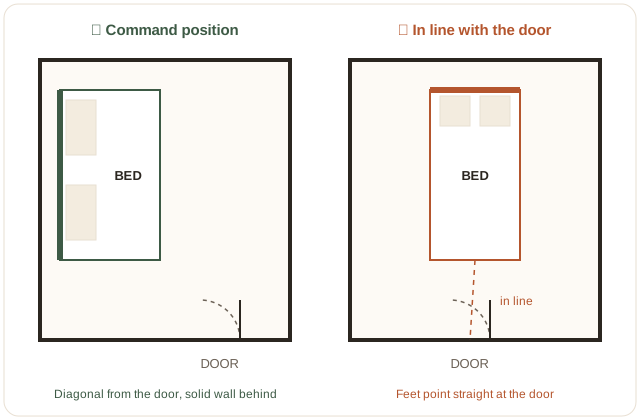
Put the crib against a solid wall, with the baby able to see the door from it but not lying directly in line with the doorway. This is the same command position used in the bedroom guide: a protected back and a clear view of who comes in. For a baby, the reason is practical. A crib in line with the door sits in the path of every draft, every hallway noise, and every person passing — the exact things that wake a light sleeper.
Do not put the crib under a window. Windows bring drafts, street noise, and bright morning light straight onto the sleeping baby, and curtains and cords near a crib are a safety problem in their own right. Do not put the crib under a beam or beneath a heavy shelf or wall unit either. A beam over a bed is a classic feng shui problem — see beams over the bed — and in a nursery the point is doubly practical: nothing heavy should ever be above a sleeping child, and a low visual weight above the crib helps the room feel less pressing.
Keep the crib itself bare in the way safety guidance recommends: a firm mattress, a fitted sheet, and nothing else. Bumpers, pillows, heavy blankets, and stuffed animals in the crib are not cozy; they are clutter around a face that cannot move them away. The feng shui rule and the safety rule agree here: clear space around a sleeping baby.
Color: gentle, warm, and mostly quiet
Nursery color should be mostly quiet. Warm cream, pale sage green, gentle peach, soft blue-grey — colors that do not shout. The reason is the same one behind the colors guide: strong, saturated color is stimulating, and a room meant for sleep should not stimulate. Bright red walls, vivid orange, and wall-to-wall high-contrast black-and-white patterns may photograph well, but they give a baby's eyes a lot to do at the exact time of day when you want them to do less.
That does not mean the room must be beige and boring. Use one gentle accent — a sage feature wall, a warm wood crib, a peach blanket — and let the color live in the things that change: books, a few toys, bedding you can swap. Babies outgrow color schemes fast, and a neutral room adapts to the next stage without repainting. If you already have a bold wall, you do not need to redo the room: soften it with plain curtains, plain bedding, and fewer bright objects at crib height.
Earth tones suit a nursery particularly well in five-element terms. Earth is grounding and stable — the qualities you want around a new, easily startled person. A warm cream wall with natural wood furniture is not just a look; it is the element of steadiness made visible. Keep metallic, shiny, and very bright finishes to a minimum near the crib.
Light: dimmable, warm, and layered
Nursery lighting needs two modes and nothing fancy. Bright enough by day for changing, dressing, and play; dim and warm at night for feeds, when you need to see what you are doing without waking the baby fully. A dimmer on the main light plus a small warm night light covers both. Avoid harsh white ceiling light at night — it wakes babies and parents alike, and it makes the room feel clinical. Our guide to light as a cure covers the same layering principle for the whole home.
Daylight matters too. Open the curtains in the morning so the room gets real daylight; it helps set a day-night rhythm, and a bright room by day makes a dark room at night feel like a genuine contrast. At night, use blackout curtains or a good blind so streetlights and early summer sun do not end the night at 4 a.m. The crib should not face the window directly even with curtains, for the draft and noise reasons above.
Skip flashing, musical, or projection mobiles over the crib for sleep. A mobile is a daytime toy, not a sleep aid, and a baby staring at moving lights and listening to a tune is a baby being entertained, not settled. If you use one, hang it for playtime and remove or switch it off at bedtime.
Sound, air, and the door
A nursery near the noisiest part of the house — beside the front door, above the garage, sharing a wall with the television — will fight you every nap. If you have a choice of rooms, pick the quieter one, even if it is smaller. If you do not, soften what you can: a rug on a hard floor, curtains over a bare window, a door that closes properly, and a white-noise machine at low volume, placed across the room from the crib rather than beside the baby's head.
Air matters as much as sound. Babies breathe faster than adults, so a nursery should be aired daily and kept free of strong smells: no plug-in air fresheners, no heavy scented candles, no new-furniture smell trapped behind a closed door. A plant or two is fine once the baby is past the mouthing-everything stage, but keep plants out of reach and skip spiky or toxic varieties. The plants guide lists safe, easy choices.
The door itself deserves attention. A nursery door that creaks, sticks, or slams will wake a baby at the worst moment, so fix the hinges and add a soft closer or a door stop. And keep the path from the door to the crib clear: night feeds in the dark should not involve stepping over toys.
Storage: closed, low, and ruthless
A nursery stays calm only if tidying it takes five minutes. That means closed storage: baskets with lids, drawers, a wardrobe with doors. Open shelves look lovely in photos and become dust traps and toppling hazards in real life, especially once a baby can pull up and reach. Keep everyday things — nappies, wipes, sleepwear — within arm's reach of the changing spot, and everything else behind a door.
Rotate toys. Put out a few at a time and keep the rest in a box elsewhere; swap them every week or two and old toys feel new again. This is not just tidiness: a baby faced with thirty toys plays with none of them for long, while a baby faced with five plays deeply. The same logic applies to clothes. Babies outgrow sizes in weeks, so pass on outgrown clothes promptly instead of storing them in the nursery "just in case." The room should hold what this baby uses now, not a museum of earlier sizes.
Finally, resist turning the nursery into overflow storage for the rest of the house. The spare suitcase, the old printer, the box of things for the charity shop — all of it lives somewhere else. A nursery is a room with a sensitive occupant, and every extra object is one more thing collecting dust near a small pair of lungs. Our closet and storage guide covers the same closed-storage principle for adult rooms.
A simple setup to start with
Start with the crib on a solid wall, not in line with the door and not under a window or beam. Paint or dress the room in soft, warm tones with one gentle accent. Fit a dimmer and a warm night light, add blackout curtains, and give everything a lidded home. Then live in it for a week before buying anything else. Most nurseries fail not from missing the right object but from accumulating too many of them — and the calmest nurseries are the ones where someone kept saying no.
Go deeper with the book
Feng Shui Made Simple covers every room this way — bedroom, living room, kitchen, office, entryway — with diagrams and a 7-day plan for doing the whole house.
Frequently asked questions
Where should the crib go in a nursery?
Against a solid wall, with a clear view of the door but not directly in line with it. The baby should not lie with feet pointing straight out the door, and the crib should not sit under a window, a beam, or a heavy shelf.
What colors are best for a nursery?
Soft, muted tones: warm cream, pale sage, gentle peach, soft blue-grey. Strong reds, bright oranges, and high-contrast black-and-white patterns everywhere can be too stimulating for a room meant for sleep. Save bold color for a few toys and books.
Should a nursery have a mirror?
A mirror is not necessary in a nursery, and one facing the crib is best avoided — a baby does not need reflected movement in the room while trying to sleep. If you want a mirror, put it on a side wall where it reflects light, not the crib.
How do I keep a nursery calm when it fills up with stuff?
Give everything a closed home: baskets with lids, a wardrobe, drawers. Rotate toys so only a few are out at a time, and pass on outgrown clothes and gear promptly. A nursery that can be tidied in five minutes stays calm; one that cannot, does not.
Is it okay for a baby to sleep in the parents' bedroom?
Yes, and it is very common in the first months. The same rules apply in miniature: crib against a solid wall, not in line with the door, soft light, and a clear path around the crib for night feeds.