Feng Shui for Selling Your Home: Staging That Feels Right
Buyers decide with their feelings first and justify with numbers second. They walk in, and within seconds they know whether the home feels spacious or cramped, cared for or neglected, easy to live in or full of problems. Feng shui staging is about shaping those first seconds: clear paths, bright rooms, and nothing that makes a visitor hesitate. It cannot change the market, the location, or the floor area — and this guide promises none of that — but it can make sure buyers see the home at its best instead of tripping over its worst habits.
The principle is simple: a buyer must be able to imagine their own life in the space. Anything that anchors the home too firmly to your life, or that signals neglect, gets in the way. Everything below serves that one goal.
The entryway: the first ten seconds
Staging starts before the front door opens. Clear the path to the door, sweep it, and make sure the door itself opens fully without sticking. Inside, the entryway should be empty enough to step into comfortably: shoes in a cupboard, coats on hooks or in a closet, no pile of bags by the door. A bright light, a clean mirror, and one healthy plant or simple piece of art tell a buyer the home is cared for.
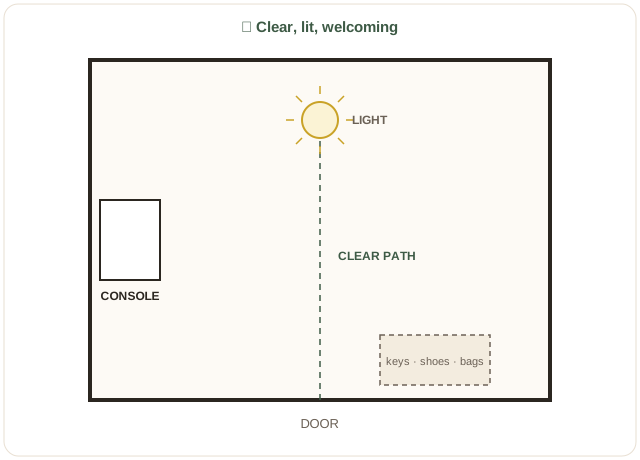
If the entryway is dark, fix the lighting before anything else. A dark entrance makes the whole home feel smaller, and buyers carry that feeling from room to room. The entryway guide covers the details; for selling, the rule is shorter: bright, clear, and smelling of nothing in particular. Air the home before viewings, and skip heavy air fresheners — buyers distrust strong scents because they suspect something is being covered up.
Depersonalize without sterilizing
Take down most family photographs, children's artwork displays, diplomas, and collections that dominate a wall. The reason is practical: buyers need mental room to place their own sofa, their own pictures, their own life. A wall covered in your family history leaves no room for theirs. The same goes for strongly personal color schemes and themed rooms — a bedroom painted entirely in a favorite football team's colors is a room the buyer has to mentally repaint before they can like it.
But do not strip the home bare. An empty home feels cold, and buyers in an empty room notice every scuff and flaw. Keep neutral art, a few books, a bowl of fruit, fresh towels in the bathroom, and made beds with plain, clean bedding. The target is a home that looks like someone pleasant lives there, not like someone specific lives there. One or two small personal touches — a vase, a plant — keep it human.
Space: remove a third of the furniture
Most lived-in homes have too much furniture for viewings. A room with every chair, side table, and bookshelf in place feels smaller than the same room with one piece removed. The staging rule of thumb is to remove about a third of the furniture, starting with the pieces that block paths: the extra chair in the bedroom, the second side table, the oversized coffee table. What remains should leave clear walkways through every room, so buyers can move without sidestepping.
Pay attention to the living room seating group and the bedroom layout. In the living room, arrange seating so it faces inward and conversation, not a wall of storage. In the bedroom, the bed should be made, accessible from both sides where possible, and not pushed against the wall with a pile of boxes beside it. Buyers open cupboards and closets, so clear those too — a stuffed closet tells a buyer there is not enough storage, even if the room itself is large.
Fix the small broken things
Nothing undermines a viewing faster than small disrepair. A dripping tap, a cracked tile, a door handle that comes off, a light switch that does nothing — each one is minor, but together they tell a buyer the home has not been maintained, and they start wondering what bigger problems are hiding. Walk through the home as a buyer would and fix everything that takes under an hour: tighten handles, replace cracked switch plates, re-caulk the bath edge, oil squeaky hinges, replace dead bulbs.
Kitchens and bathrooms deserve the most attention because buyers scrutinize them hardest. You do not need a renovation — clean grout, a cleared countertop, working taps, and a bathroom that smells fresh do most of the work. Clear kitchen counters almost completely: a kettle and a fruit bowl are plenty. The kitchen guide explains why a clear, working kitchen reads as the heart of a home rather than a chore list.
Light, air, and the viewing itself
On viewing days, open curtains fully and turn on lights in every room, even in daytime — a lit room photographs better and feels larger. Open a window briefly beforehand for fresh air, then close it so the home is not cold or noisy. If you have a garden or balcony, clear it too: buyers treat outdoor space as an extra room, and a tidy balcony extends the home. The balcony guide has the specifics.
Outside counts too
Buyers judge the outside before they judge the inside, so the front of the home deserves the same treatment. Mow or sweep the front area, trim any plant that blocks the path or the door, and remove dead plants from pots by the entrance — a dead plant at the door is the first thing a buyer sees and the last thing you want them to remember. If you have a garden, mow the lawn, clear children's toys and tools from view, and make sure fences and gates open and close properly. A garden does not need to be beautiful; it needs to look cared for and usable. The same applies to a balcony: clear it, sweep it, and put out one chair or a small plant so buyers can picture sitting there. Outdoor space presented as an extra room adds perceived living area at zero cost, while a cluttered balcony reads as a storage cupboard with a view.
Finally, leave during viewings if you can. Buyers speak freely and linger longer when the owner is not present, and they need that freedom to start imagining the home as theirs. Your job is done before the doorbell rings: a clear entrance, bright rooms, space to walk, and nothing broken. That is staging that feels right — not a trick, just the home presented the way it deserves to be seen.
Go deeper with the book
Feng Shui Made Simple covers every room this way — bedroom, living room, kitchen, office, entryway — with diagrams and a 7-day plan for doing the whole house.
Frequently asked questions
Does staging really matter, or do buyers just look at size and location?
Size and location set the price range, but feeling decides between similar homes. A clear, bright, well-kept home is easier to imagine living in, and that ease is what staging sells.
Should I remove all personal photos before viewings?
Remove most of them, especially large family displays in the entryway and living room, so buyers can picture their own life there. Keep a few neutral pieces of art and one or two small personal touches so the home still feels lived in rather than empty.
What is the single most important room to stage?
The entryway, because it frames the first impression of the whole home. After that, the living room and the main bedroom, in that order — buyers weigh the rooms they will spend the most waking and sleeping hours in.
Can feng shui staging make my home sell for more money?
No staging method can promise a higher price or a faster sale — price depends on the market, location, and condition. What staging can do is present the home at its best so buyers see its full value instead of being distracted by clutter or disrepair.
Should I paint before selling?
Only if the current paint is damaged, very dark, or strongly personal. A fresh coat of warm neutral paint in the entryway and living room is usually worth it; repainting the whole house in bold colors is not.