Balcony Feng Shui: Small Outdoor Space, Big Impact
A balcony is the smallest room in the home and often the most loved — or the most wasted. In one apartment it is a morning coffee spot, a herb garden, and the place where the day starts properly. In the next it is a drying rack, a bicycle park, and a graveyard for boxes that did not fit inside. Same square meters, completely different energy.
In feng shui, a balcony is the home's connection to the outside: fresh air, daylight, sky, and weather enter here. It is also a threshold — the place where inside energy meets outside energy. A balcony that is open, clean, and used makes the whole apartment feel larger and calmer. A balcony that is blocked, cluttered, or sealed shut makes the apartment feel like a box.
The good news: balconies respond fast. A few hours of clearing, one good chair, and a handful of plants can transform one completely. This guide covers direction, safety, plants, and the habits that keep a balcony working.
Direction and sun: know what you have
Before buying anything, learn your balcony's direction and sun pattern. A south-facing balcony gets strong sun most of the day; a north-facing one gets soft, indirect light; east gets morning sun and evening shade; west gets hot afternoon sun. Direction decides everything else: which plants survive, whether you need shade, and what time of day the balcony is pleasant.
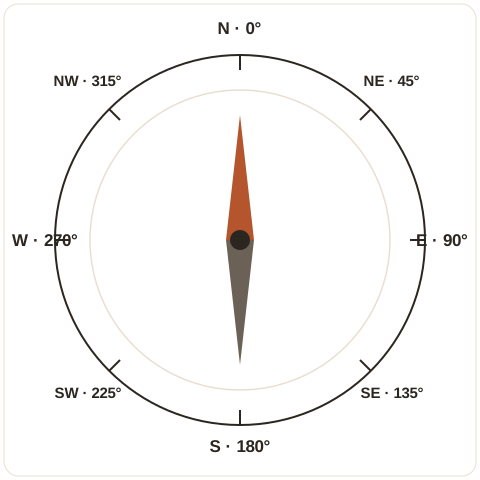
Watch the sun for a week before committing. Note when it arrives, when it leaves, and where the wind comes from. A balcony that is glorious at 8 a.m. and a wind tunnel at 6 p.m. is a morning balcony — set it up for breakfast, not dinner. Working with the balcony's nature, instead of fighting it, is the whole game. If you want to go further with directions, the compass reading guide explains how to take an accurate facing measurement for your home.
Safety and the railing
Safety comes before beauty on a balcony, especially above ground level. Railings should be solid, at proper height, and free of anything a child could climb on — no boxes, chairs, or planters pushed against the railing as steps. Keep the railing itself clear: hanging planters are fine on the inside of the railing, but nothing should dangle over the edge where wind can take it.
Weight matters on balconies. Heavy stone planters, water-filled containers, and dense soil add up fast, and older balconies have load limits. Use lightweight pots, and spread weight rather than concentrating it in one corner. If you are unsure about your balcony's load limit, ask your building management before adding anything heavy — this is a structural question, not a style question.
Wind is the balcony's constant enemy. Lightweight furniture blows, tall plants snap, and loose items become hazards. Choose heavier, low-profile furniture, secure tall planters, and bring cushions inside when storms are forecast. A wind screen — glass, slatted wood, or dense plants — can tame a windy balcony enough to make it usable, but it should never block the railing's safety function or your building's rules.
Plants that survive (and why they matter)
Plants are the balcony's main feng shui tool: living, growing energy that softens hard edges, screens ugly views, and makes a concrete slab feel like a garden. But balcony plants die in large numbers because people buy for looks instead of conditions. Match plants to your direction and wind: sun-lovers for south and west, shade-tolerant plants for north, tough wind-resistant varieties for exposed balconies. Your local nursery knows what survives in your area — ask them, and buy smaller plants that can grow into the space. The plants guide covers which plants suit which purpose indoors and out.
Keep plants healthy, not just present. A dead or dying plant on a balcony is worse than no plant — it is a daily reminder of neglect, right where you look for fresh air. Water on a schedule, prune dead leaves promptly, and replace failures without guilt. Three thriving plants beat ten struggling ones.
Herbs are the balcony's highest-value plants: basil, mint, rosemary, and chives are tough, useful, and fragrant, and picking herbs for dinner connects the balcony to the kitchen in a way no decoration can. Mint needs its own pot — it takes over anything shared.
One good seat and a reason to go out
A balcony without a seat is a balcony nobody uses. One comfortable chair and a small table are enough, even on a tiny balcony — a folding chair counts if it is comfortable and easy to reach. The seat should face something pleasant: the view, the plants, the sky, not the wall or the neighbor's laundry.
Give the balcony a daily ritual, and it will stay used. Morning coffee, evening wind-down, ten minutes of reading, watering the herbs — any ritual works, because rituals create the habit of opening the door. A balcony that gets used daily stays clean almost by itself; a balcony nobody visits accumulates clutter silently.
Lighting extends the balcony's day. A string of warm lights, a solar lamp, or a candle lantern makes an evening balcony inviting instead of dark and forgotten. Keep it warm-toned and gentle — the balcony at night should feel like a retreat, not a floodlit stage.
What not to put on a balcony
- Storage overflow. Boxes, old appliances, and things that did not fit inside turn the balcony into an outdoor cupboard and block the fresh air it exists to provide. If it has been out there a month untouched, it does not belong there.
- Permanent drying racks. Drying laundry outside is practical and traditional, but a rack that never comes down becomes the balcony's main feature. Dry, fold, bring it in.
- Blocked access. The door to the balcony should open freely and the path to it should be clear. A balcony you have to climb over things to reach is a balcony you will stop reaching.
- Sharp, spiky plants at face height near the seat. Cacti and spiky plants near where you sit or walk are uncomfortable in a small space. Keep spiky plants low, at the edges, or skip them on a small balcony.
Start this weekend: clear everything off the balcony, sweep it, and put back only one chair, one small table, and two or three plants suited to your direction. Sit there tomorrow morning. The balcony will tell you what it wants next — more plants, a screen, better light — and you will actually want to be out there to hear it.
Go deeper with the book
Feng Shui Made Simple covers every room this way — bedroom, living room, kitchen, office, entryway — with diagrams and a 7-day plan for doing the whole house.
Frequently asked questions
What direction should a balcony face?
There is no single best direction — each has a character. South gets strong sun most of the day, north gets soft indirect light, east gets morning sun, west gets hot afternoon sun. Learn your balcony's sun and wind pattern for a week, then set it up for the time of day it is actually pleasant.
What plants survive on a balcony?
Match plants to your direction and wind: sun-lovers for south and west, shade-tolerant plants for north, tough wind-resistant varieties for exposed balconies. Herbs like basil, mint, and rosemary are tough and useful. Ask a local nursery what survives in your area.
Is drying laundry on the balcony bad feng shui?
Drying laundry outside is practical and traditional. The problem is a rack that never comes down and becomes the balcony's main feature. Dry, fold, and bring the rack in — the balcony should stay a place for fresh air, not a permanent laundry.
My balcony is tiny. Is it still worth setting up?
Yes — a tiny balcony with one good chair, a small table, and two or three plants is more useful than a large balcony used as storage. Small balconies reward simplicity: fewer, better things, and a daily ritual like morning coffee.
How do I deal with a windy balcony?
Use heavier, low-profile furniture, secure tall planters, bring cushions in before storms, and add a wind screen of glass, slatted wood, or dense plants. Never let a screen block the railing's safety function or break your building's rules.