Yellow and Earth Tones in Feng Shui: Grounding
Yellow is the color of the earth element, and earth is what steadiness feels like in a room. A space with warm earth tones feels settled, solid, and easy to be in — the way a house with thick walls feels different from a tent. Used well, yellow and its relatives calm a busy household down. Used badly, they make a room feel dull, heavy, and stuck.
What earth tones actually do in a room
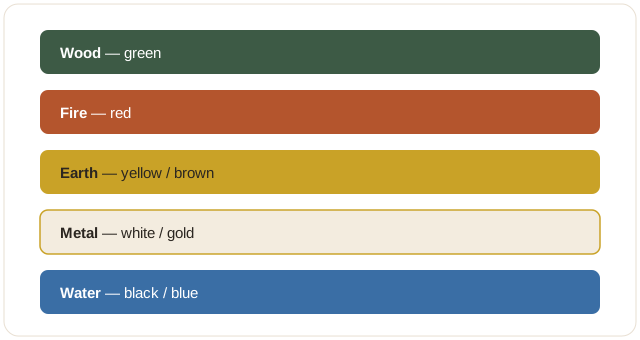
In the five-element system, earth sits at the center of the cycle: wood feeds fire, fire makes earth, earth produces metal, metal collects water, water nourishes wood. Earth is the element that receives and holds. That is why its colors — yellow, ochre, sand, terracotta, warm brown — read as grounding. They pull a room's energy downward and inward, which is exactly what you want in spaces meant for rest, eating, and gathering.
Think of it in practical terms. A pale yellow wall reflects warm light and makes a room feel sunlit even on a grey day. A terracotta floor tile feels solid underfoot. A brown wooden table anchors a room the way a rug anchors a seating group. None of this is magic; it is how warm, mid-tone colors behave in real light, and feng shui's earth language is a shorthand for those effects. For the full element cycle, see the five elements guide.
Shades of yellow: from cream to ochre
Not all yellows behave the same way, and the shade you choose matters more than the color family. Pale butter yellow and warm cream are gentle and easy to live with on large surfaces; they brighten a room without shouting. Golden yellow and ochre are stronger and better as accents — a feature wall, a throw, a set of cushions — because a whole room of saturated yellow can feel restless rather than restful.
Then there are the earth tones that are not yellow at all in the usual sense: terracotta, clay, sand, taupe, and warm chocolate brown. These are often the most practical earth colors, because they hide wear, pair with almost any wood, and age gracefully. If you love yellow but worry about going overboard, start here: a sandy or terracotta base with one true yellow accent gives you the warmth without the glare.
One warning about bright, lemony yellow. In small doses it is cheerful and energizing, but large areas of high-saturation yellow are visually loud, and in a bedroom or a study they can make it hard to switch off. If a room already feels busy, choose the muted end of the range. The colors cheat sheet maps every element color to its best uses.
Where earth tones work best
Earth colors suit the rooms where people need to feel settled. The living room is the obvious one: a warm neutral wall, a brown leather or fabric sofa, wooden furniture, and a terracotta or sand rug create a room that invites people to sit down and stay. The dining room is another natural fit — earth tones are the colors of food, harvest, and the table itself, and they make meals feel unhurried.
The entryway benefits too. The first thing you see when you walk in sets the tone for the whole house, and a warm, grounded entry says 'you are home' in a way that stark white or cold grey does not. A sand-colored wall, a wooden console, and a warm-toned runner are enough; you do not need to redecorate the hall to get the effect. See the entryway guide for the layout side of this.
Bedrooms can take earth tones well, but keep them soft. Warm cream, sand, or muted taupe on the walls, with deeper browns in bedding and wood, makes a bedroom feel sheltered. Save the strong ochres and terracottas for accents here — a throw, a lamp base, a framed print — so the room stays calm at night. The bedroom guide covers the rest of the sleep-friendly choices.
Pairing earth with the other elements
Earth rarely works alone, and its pairings follow the element cycle. Fire feeds earth, so red, coral, and warm orange accents strengthen earth tones — a terracotta room with a deep red cushion, or a sand wall with candlelight, feels warmer and more alive than either color alone. This is the gentlest way to lift an earth-toned room that feels flat.
Earth feeds metal, so white, cream, and soft metallics lighten earth without fighting it. A brown wooden table with white crockery, or a sand wall with a pale ceiling and brass lamp, keeps the grounded feeling while stopping the room from going dark. And earth controls water, which is why a little earth color is the classic balancer for a room with a lot of blue or black — a water-heavy bathroom, for instance, warms up with a sand towel set or a wooden stool.
The pairing to use sparingly is earth with wood. Wood controls earth in the cycle, so a room that is all green plants and yellow walls can feel visually busy, with two strong color families competing. It is not forbidden — a plant in a terracotta pot is the classic combination, after all — but keep one of the two dominant and the other an accent.
When earth becomes too much
Too much earth is easy to recognize: the room feels heavy, dim, and a bit airless, as if nothing in it ever changes. Dark brown walls, brown furniture, brown floors, and brown curtains together do not read as grounded; they read as a cave. If your room feels like that, the fix is light, not a new color scheme. Paint the ceiling and the upper walls a warm white, add a mirror opposite the window, and swap one heavy brown textile for a cream one.
The other excess is the opposite problem: a room painted in a single flat yellow with nothing to break it up. Flat, unbroken color tires the eye quickly. Break it with texture — wood grain, woven fabric, a stone or ceramic object — and with one contrasting accent, even a small one. A yellow room with a dark wooden frame or a deep green plant immediately looks intentional rather than accidental.
As a rule of thumb, let earth tones cover roughly half to two-thirds of a room's visible surfaces, with the rest in lighter neutrals or one supporting element color. That ratio keeps the grounding effect without the heaviness, and it leaves the room easy to refresh with a new cushion or throw when the seasons change.
Small changes that ground a room fast
You do not need to repaint to bring earth into a room. Start with the floor: a sand, jute, or terracotta rug under the main seating or table grounds the furniture group instantly. Then add one wooden object with visible grain — a tray, a bowl, a side table — because natural wood carries both earth warmth and a tactile quality that painted surfaces lack.
Next, look at the textiles. Cushions, throws, and curtains in ochre, mustard, or warm taupe are cheap, reversible, and easy to adjust by season: deeper browns in winter, lighter sands in summer. Finally, add something made of actual earth — a ceramic vase, a stone ornament, a clay pot — which anchors the color story in a real material rather than paint alone.
Do one change, live with it for a few days, and notice whether the room feels calmer to come home to. Earth is a slow element; its effect builds quietly rather than announcing itself. That quiet is the point.
Go deeper with the book
Feng Shui Made Simple covers every room this way — bedroom, living room, kitchen, office, entryway — with diagrams and a 7-day plan for doing the whole house.
Frequently asked questions
Is yellow good for a bedroom?
Soft yellow is fine — warm cream, butter, or sand on the walls makes a bedroom feel sheltered. Avoid large areas of bright, saturated yellow in a bedroom, because strong yellow is visually stimulating and can make it harder to wind down at night.
What colors go with earth tones?
Fire colors (red, coral, warm orange) strengthen earth, and metal colors (white, cream, soft gold) lighten it. Blue and black can be balanced with a little earth color, while green works best as an accent rather than an equal partner, since wood and earth compete visually.
Can I use yellow in a small room?
Yes, if you pick the right shade. Pale butter yellow or warm cream reflects light and can make a small room feel brighter. Keep strong ochre or mustard to accents in a small space, and pair them with a pale ceiling so the room does not feel lower.
Is brown too dark for a living room?
Not if it is balanced. Brown furniture and wood floors are classic grounding elements. Keep walls and ceilings light, add a mirror or good lighting, and the room will feel warm rather than dark. The problem is only when brown covers every surface with nothing lighter to break it up.