Kitchen Above Bedroom (and Other Stacking Problems)
In a two-storey house or a flat, the room above you matters as much as the room you are in. A kitchen above a bedroom is the classic stacking problem: the room you sleep in sits under the room where water runs, pans clatter, and someone walks around at midnight making tea. Feng shui tradition dislikes it, and this time the reasons are almost entirely practical — noise, leaks, smells, and heat, all travelling downward through the floor.
Stacking problems are a fact of multi-storey living, and they are not all equal. A bedroom above a bedroom is fine. A living room above a bedroom is usually fine. The difficult pairs are the ones where a wet, noisy, or heavy room sits over a quiet, restful one: kitchen over bedroom, bathroom over bedroom, bathroom over kitchen, and laundry over bedroom. This guide starts with the kitchen-over-bedroom case and then runs through the others, because the fixes rhyme.
What actually comes through the floor
Four things travel downward. Noise is the first and most complained about: footsteps on a hard kitchen floor, chairs scraping, water running in pipes, the washing machine's spin cycle. Smells are the second: cooking odours rise, but they also settle into the room below through gaps around pipes and shared ventilation. Heat is the third: a kitchen generates heat, and a bedroom below a kitchen can be warmer than the rest of the house. And water is the fourth and most serious: a leaking dishwasher, washing machine, or sink fitting drips downward, and the bedroom ceiling is where it appears.
Tradition describes the kitchen-over-bedroom pattern as Fire pressing down on rest — the kitchen's Fire element over the bedroom's need for calm. The practical translation is the same advice: separate the active room from the resting room, or soften what passes between them. The kitchen guide covers the kitchen's own layout, and the bedroom guide covers protecting sleep, which is what is at stake here.
The bed's position: the first, free fix
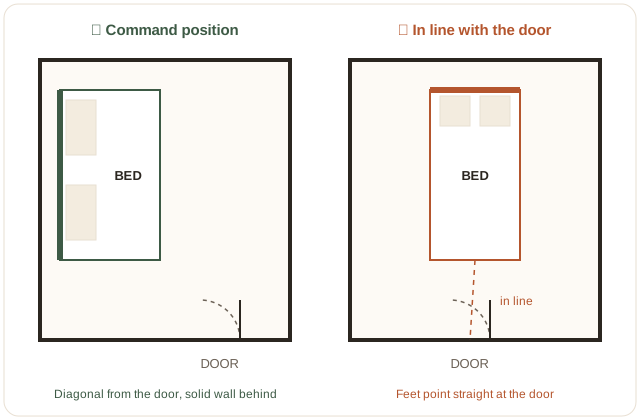
If the kitchen above has a clear activity zone — the sink and cooker on one side, a quiet breakfast corner on the other — then the bedroom below has a quiet zone too, and the bed should go there. Do not put the bed directly under the cooker, the sink, or the washing machine if you can avoid it; put it under the part of the kitchen that is least used, or under a cupboard run. This is free, it takes an afternoon, and it is the single change that most reduces the feeling of activity overhead.
If the bed cannot move — a small room, a fitted wardrobe, a window that dictates the layout — then the ceiling becomes the fix. A solid, well-fitted ceiling with no gaps around pipes cuts noise more than any symbolic cure, and acoustic insulation between the joists, fitted during any renovation, cuts it further. For renters, a heavy rug and soft furnishings in the bedroom absorb some of the sound that does get through, and a white-noise machine or a fan at night masks the rest. The renters' guide has the no-building-work versions of all of these.
Pipes, leaks, and the ceiling you sleep under
Water is the stacking problem to take seriously, because it is the one that damages property. Check the bedroom ceiling under a kitchen or bathroom above for stains, bubbling paint, or a musty smell — all three are early signs of a slow leak. Know where the stopcock is, and if you are the upstairs neighbour, know that a washing machine hose is a consumable: replace it every few years, and never run the machine when the flat is empty. In a house you own, a leak detector under the sink and the dishwasher costs little and catches the slow drip before it becomes a ceiling stain.
Smells travel through the same gaps as water: around pipes, through shared ventilation, and through a poorly sealed ceiling. Sealing gaps around pipe entries with caulk or expanding foam is unglamorous and effective, and it also cuts draughts. A kitchen extractor that vents outside, rather than recirculating, reduces the cooking smells available to travel in the first place.
Other stacking patterns to know
Bathroom over bedroom is the closest cousin: the same noise and water issues, plus the specific discomfort of a toilet overhead. The fixes are the same — bed out from under the bathroom's wet zone, ceiling sealed, leaks watched — with one addition: a bathroom above a bedroom benefits from a quiet-closing toilet seat and soft flooring, small courtesies that cost little and matter a lot to the person below.
Bathroom over kitchen is the pattern tradition dislikes most, on hygiene grounds that are easy to understand: a leak from above lands in the room where food is prepared. The practical answer is the same vigilance — leak detectors, hose replacement, ceiling checks — plus keeping food preparation away from the spot directly under the bathroom's wet zone where the layout allows.
Laundry over bedroom is the noisy one: a washing machine's spin cycle is the loudest regular sound in a home, and through a floor it is louder still. If the laundry is above a bedroom, run the machine during the day, fit anti-vibration pads under its feet, and keep the bedroom's soft furnishings — rug, curtains, upholstered headboard — doing their quiet absorbing work.
Staircase over bedroom, and heavy furniture over bedroom, are the milder versions: footsteps on stairs and the thud of a wardrobe door. A carpeted stair and a rug under heavy furniture upstairs soften both. The staircase guide covers stairs generally, including the cases where a staircase itself is the layout problem.
If you are buying or choosing a flat
Stacking is one of the few feng shui concerns that is also a straightforward buying check. When viewing a flat or a house, ask what is above the main bedroom, and listen: visit in the evening if you can, when the neighbours are home and cooking. A bedroom under a kitchen is not a deal-breaker — the fixes above handle it — but it is a negotiating fact, and it is worth knowing before you sign rather than discovering at midnight on the first night.
And if you already live with a stacking problem, keep it in proportion. Most stacking issues are nuisances, not disasters: a bit of noise, a bit of warmth, a ceiling to watch. Move the bed, seal the gaps, watch for leaks, and the bedroom below becomes a perfectly good bedroom — one whose one weakness has been thought about, which is more than can be said for most rooms. The house works in layers, and the layers can be taught to get along.
Go deeper with the book
Feng Shui Made Simple covers every room this way — bedroom, living room, kitchen, office, entryway — with diagrams and a 7-day plan for doing the whole house.
Frequently asked questions
Is it bad feng shui to have a kitchen above a bedroom?
Tradition dislikes it, reading the kitchen's active Fire energy as pressing down on rest. In practice the issues are noise, cooking smells, heat, and the risk of leaks from above — all manageable with bed position, ceiling sealing, and leak checks.
Where should the bed go under a kitchen?
Under the quietest part of the kitchen above — a cupboard run or an unused corner — not under the cooker, sink, or washing machine. If the bed cannot move, focus on the ceiling: seal gaps around pipes and add soft furnishings to absorb sound.
What is the worst stacking pattern?
Bathroom over kitchen is the one tradition dislikes most, because a leak from above lands where food is prepared. Bathroom over bedroom is the most complained about, because of noise and the discomfort of a toilet overhead.
How do I check for leaks from the room above?
Look at the ceiling below for stains, bubbling paint, or a musty smell. Fit leak detectors under sinks and dishwashers, replace washing machine hoses every few years, and know where the stopcock is.
Can renters fix a stacking problem?
Yes, mostly: move the bed, seal pipe gaps with caulk, add rugs and soft furnishings to absorb sound, and use a white-noise machine at night. Structural fixes like insulation between joists need the landlord, but the free fixes cover most of the nuisance.