Green in Feng Shui: The Color of Growth
Green is the easiest strong color to live with, and the hardest to get exactly right. In feng shui, green is wood's color: growth, freshness, flexibility, and new beginnings — the color of spring leaves and new shoots. It calms without sedating, freshens without chilling, and suits more rooms than any other strong color. But green has a wide range, from warm olive to cold mint, and the wrong green in the wrong light can feel sickly, dark, or dull.
Green's power comes from its association with living things. Humans respond to green the way they respond to plants: it signals life, safety, and fresh air, because in nature green means water nearby and food growing. That is why a green room feels restorative in a way a grey room does not, even when both are equally tidy. The wood element guide covers green's element in full; this guide is about the color itself and how to choose it.
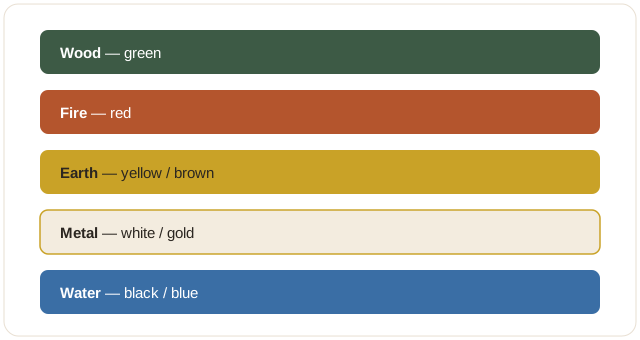
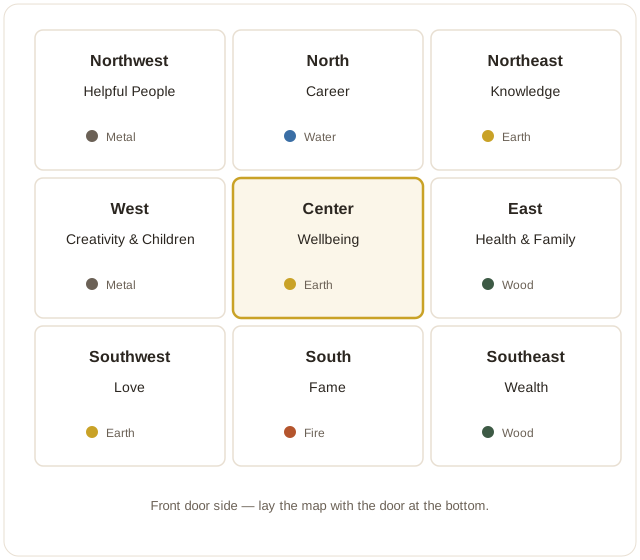
Green's cycle is wood's cycle: water feeds wood, so blue and black tones support green; wood feeds fire, so green supports red and warm tones; metal controls wood, so white and gold trim green back. Green's bagua homes are the east (Health and Family) and the southeast (Wealth). Its shape is the tall rectangle and the vertical line. Its material partners are plants and wood itself.
Choosing your green: warm, cool, light, and dark
Greens divide into warm and cool, and the difference matters more than the exact shade. Warm greens — olive, sage with a yellow undertone, moss, avocado — feel earthy and welcoming, and they suit rooms where people gather: living rooms, kitchens, dining rooms. Cool greens — mint, seafoam, emerald with a blue undertone — feel fresh and crisp, and they suit bathrooms, bedrooms, and rooms that need a clean feeling.
Light greens — pale sage, soft pistachio, light mint — are the safest greens for large areas. They freshen a room without darkening it, and they work in small rooms and dark rooms where a deep green would close the space in. If you are painting a whole room green for the first time, start with a light green. You can always deepen it with darker green furniture or textiles; repainting a too-dark room is a much bigger job.
Dark greens — forest, hunter, deep emerald — are rich and dramatic, but they need light. A dark green wall in a sunny room with white trim and good lighting looks luxurious. The same wall in a north-facing room with one small window looks like a cave. The test is simple: paint a large sample board, lean it against the wall, and look at it at midday and in the evening. If it still looks green in the evening, it will work. If it looks black, choose a lighter shade.
Green room by room
The living room is green's best room. A sage or olive sofa, green cushions, a green accent wall behind plants — arranged as in the living room guide — all of these make a living room feel alive without making it loud. Green pairs beautifully with wood furniture, because they are the same element, and with white, because metal trims wood into shape. A green-and-white living room with wooden floors is one of the most reliably pleasant combinations in home decorating.
Kitchens suit green well, especially herb green and sage. Green in a kitchen connects to food, freshness, and the plants that often live there. Green cabinets have become popular for good reason, and the kitchen guide shows how they pair with the room's other elements: they feel less clinical than white and less heavy than dark wood. If full green cabinets feel like too much, green tiles, a green blind, or green bar stools give you the color in a smaller dose.
Bedrooms suit soft, muted greens better than bright ones. A pale sage bedroom calms without chilling, and it suits people who find blue bedrooms too cold and beige bedrooms too dull. Avoid bright lime or neon greens in bedrooms — they are stimulating rather than restful, and they make a room feel like a sports drink advertisement. Bathrooms suit cool greens, especially seafoam and mint, which feel clean and fresh and pair well with white tiles and chrome.
Home offices benefit from green more than most rooms, because green is the color of growth and new ideas. A green accent wall behind the desk, a plant on the desk, green storage boxes — these support the room's purpose without distracting from it. The home office guide shows how to place a desk for focus; green is the color layer on top of that layout.
Green with other colors
Green's best partners follow the cycle. With water colors — navy, dark blue, black accents — green feels deep and supported, like a forest beside a lake. With fire accents — a red cushion, a warm lamp — green feels lively, like spring growth in sunlight. With earth tones — terracotta pots, brown wood, yellow cushions — green feels grounded and natural, like a garden. With metal — white walls, gold frames — green feels crisp and shaped, like a pruned hedge.
Green's worst partner is too much of itself. An all-green room — green walls, green sofa, green curtains, green rug — feels monotonous and slightly unreal, like living inside a leaf. Break green up with neutrals: white, cream, wood tones, or stone. The plants themselves count as green too. If a room already has several large plants, you need less green paint and fewer green textiles, because the plants are already doing the color work.
When green goes wrong
Green goes wrong in three ways. The first is the wrong undertone: a green with a yellow cast in a room with cool light can look sickly, and a green with a blue cast in a warm room can look cold. Test samples in your own light before committing. The second is too dark for the light available, which turns a room into a cave — solved by choosing a lighter shade or limiting dark green to one wall. The third is dead green: faded curtains, dying plants, or a green that has gone grey with dirt. Green is the color of life, so faded or dirty green reads as the opposite. Keep green textiles clean and plants healthy, and the color keeps its meaning.
Green's gift is renewal. A home with green in it feels like something is still growing there, even in winter. Use it where you want freshness and new beginnings — a living room that needs life, an office that needs ideas, a bedroom that needs calm without cold — and choose the shade for your light, not for the paint chart. Green rewards that small care with a room that feels alive every day.
Go deeper with the book
Feng Shui Made Simple covers every room this way — bedroom, living room, kitchen, office, entryway — with diagrams and a 7-day plan for doing the whole house.
Frequently asked questions
What does green mean in feng shui?
Green is wood's color: growth, freshness, flexibility, and new beginnings. It calms without sedating and suits more rooms than any other strong color.
Which green should I paint my living room?
Start with a light warm green like sage or olive for large areas; they freshen without darkening. Save dark forest greens for sunny rooms with good light, and test a sample board at midday and evening first.
Is green good for a bedroom?
Soft, muted greens like pale sage are excellent for bedrooms — calm without cold. Avoid bright lime or neon greens, which are stimulating rather than restful.
What colors go well with green?
Water tones (navy, dark blue) deepen it, fire accents (red, warm light) liven it, earth tones (terracotta, brown) ground it, and metal (white, gold) crisps it. Avoid an all-green room with no neutrals.
Do plants count as green in a room?
Yes — plants are green and wood energy already. If a room has several large plants, use less green paint and fewer green textiles, since the plants are doing the color work.