Wood Element at Home: Plants, Green, and Growth
Wood is the element of spring. In the five-element system it stands for growth, new beginnings, flexibility, and upward movement — the energy of a plant pushing toward light. At home, wood shows up as living plants, wooden furniture, green tones, and tall, vertical shapes. Used well, it makes a room feel alive and forward-looking. Used carelessly, it can make a room feel crowded, restless, or overgrown.
Start with what wood actually is in feng shui, because the word misleads people. Wood does not only mean timber. It means anything alive and growing, anything green, and anything with a tall, column-like shape. A living plant is the purest wood in a home. A wooden table is wood too, but so is a green cushion, a tall bookshelf, and a striped wallpaper that draws the eye upward. The five elements guide explains the full cycle; what matters here is how wood behaves in a real room.
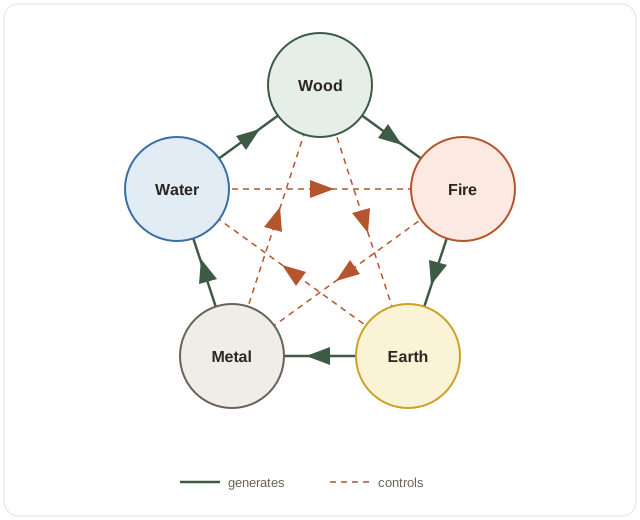
Wood feeds fire and is fed by water, in the generating cycle: Wood → Fire → Earth → Metal → Water → Wood. That single sentence explains most wood decisions. Put wood near water — a plant beside a small fountain, green towels in a bathroom — and the water supports it. Put wood beside fire — plants near a fireplace or a red accent wall — and the wood feeds the fire, strengthening it. And wood controls earth: too much wood energy in an earth-heavy room, like a room full of yellow and square furniture, can feel dominating rather than supportive.
Plants: the best wood you can add
A healthy living plant beats every other wood cure, because it does several jobs at once. It adds green, it adds a living presence to the room, it softens hard corners, and it gives you something to tend — and tending is part of the point. A plant you water, prune, and watch grow is a small daily reminder of growth itself. The plants guide covers placement room by room, but the core rules belong here too.
Choose plants that suit the light you actually have, not the light you wish you had. A plant dying slowly in a dark corner is worse than no plant at all: it adds a daily sight of decline to the room. If your home is dark, choose shade-tolerant plants like pothos or snake plants, or use high-quality artificial plants and be honest about them. A dusty plastic plant is not wood energy; it is clutter. Keep artificial plants clean and replace them when they fade.
Keep plants healthy and proportionate. One large, thriving plant anchors a room. Ten small struggling ones on every surface make it feel like a nursery that got out of hand. Prune dead leaves promptly, repot when roots crowd the pot, and remove any plant that is beyond saving. In feng shui, dead or dying plants are one of the few things that are consistently treated as a problem, and the practical reason is obvious: you look at them every day.
Green, wood tones, and tall shapes
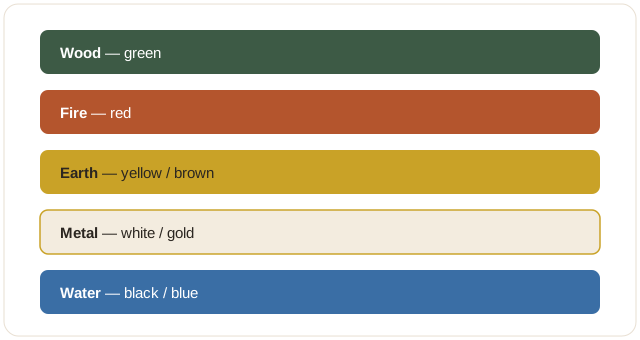
Green is wood's color, and it is one of the easiest colors to live with. Soft sage and muted olive calm a room without darkening it; deep forest green adds richness but needs good light or it can feel heavy. The mistake people make with green is painting a whole room in a single loud shade and then wondering why it feels like a cave. Use green the way you would use plants: as living accents against a neutral background. A green sofa, green bedding, or one green accent wall gives you the color without drowning the room.
Wooden furniture counts, but not all wood is equal in effect. Warm, visible wood grain — oak, walnut, bamboo — feels alive and warm. Dark, heavy, highly polished wood can feel formal and imposing instead. In a room that already feels stiff, swapping a heavy dark cabinet for a lighter wooden piece, or simply removing one large wooden item, can change the whole mood. Bamboo deserves a special mention: it grows fast, it is light and strong, and it suits the wood element beautifully in flooring, blinds, and small accessories.
Tall, vertical shapes carry wood energy too. A tall bookshelf, a floor lamp with a slim column, a vertical striped curtain — all of these draw the eye upward and give a room a sense of lift. This is genuinely useful in rooms with low ceilings, where horizontal furniture can make the space feel squat. One or two vertical accents are enough; a room full of tall narrow objects starts to feel like a forest of poles.
Where wood belongs, room by room
Wood belongs most naturally in the east and southeast, the two bagua sectors associated with wood: East is Health and Family, Southeast is Wealth. That does not mean you must put all your plants in the east side of the house — the bagua is a guide for emphasis, not a set of locked rooms. But if you have a home office in the east, or a family living area in the southeast, giving those rooms a little extra wood — a plant, green accents, wooden furniture — supports what those rooms are for.
In practice, wood works best in rooms where growth and activity are the point. A home office benefits from a plant and wooden desk accessories, because the room is about starting and building things. The home office guide shows how to place them without cluttering the desk. A living room benefits from one or two large plants, which soften the room and give it life. A kitchen, where wood feeds the fire of cooking, suits wooden boards, bamboo utensils, and a herb pot on the sill.
Wood is less welcome where rest is the point. A bedroom full of plants and green can feel too active for sleep, and plants also release moisture and attract insects if overdone. One small plant on a dresser is fine; a jungle is not. Bathrooms are a special case: water feeds wood, so plants often thrive there, but the damp also means you must choose plants that like humidity and keep them from crowding the space.
Too much wood, and how to balance it
Too much wood feels restless. Signs include a room that feels crowded despite being tidy, a space where your eye never settles, or a home where every surface holds a plant, a wooden object, or something green. The balancing element is metal, which controls wood in the controlling cycle: Wood controls Earth, Earth controls Water, Water controls Fire, Fire controls Metal, Metal controls Wood. In plain terms, adding metal — white or gold tones, round shapes, metal frames or objects — trims wood back, the way pruning shears trim a plant. The metal element guide covers this in detail.
You rarely need to remove wood entirely. Usually the fix is simpler: take out one or two plants, replace a green throw with a neutral one, or add a single metal-framed mirror or white ceramic vase. Small corrections beat dramatic overhauls. And remember that wood is seasonal energy — spring energy. If a room feels stuck or stale, adding a little wood is often the fastest way to make it feel like something is beginning again. That is the real gift of this element: it reminds a home that growth is still possible.
Go deeper with the book
Feng Shui Made Simple covers every room this way — bedroom, living room, kitchen, office, entryway — with diagrams and a 7-day plan for doing the whole house.
Frequently asked questions
What is the wood element in feng shui?
Wood is the element of growth, new beginnings, and upward movement. At home it appears as living plants, wooden furniture, green tones, and tall vertical shapes.
Do I need real plants, or do artificial plants count?
Real, healthy plants are best, because they are genuinely alive and growing. Artificial plants can work visually if they are clean and convincing, but a dusty or faded plastic plant is clutter, not wood energy.
Which rooms suit the wood element best?
Rooms for growth and activity: home offices, living rooms, and kitchens. Wood is traditionally linked to the east (Health and Family) and southeast (Wealth) sectors of the bagua.
How much wood is too much?
When a room feels crowded, restless, or like your eye never settles, despite being tidy. Balance it by removing a plant or two and adding metal tones — white, gold, or round metal objects.
Can I have plants in the bedroom?
One small plant is fine, but a bedroom full of plants can feel too active for rest. Keep bedrooms mostly calm and save the larger plant displays for living areas and offices.