Artwork Placement: What to Hang Where (and What to Avoid)
Art is the fastest way to change how a room feels, and the easiest thing to get wrong. A picture is not just decoration: it is the largest single block of color and emotion on a wall, and you will look at it thousands of times. Feng shui treats artwork as a statement of what you want the room to be — calm or lively, social or private, hopeful or restless — and asks a simple question about each piece: does this image match what this room is for?
That question, applied room by room, is the whole guide. The sector matching at the end is a bonus, not the starting point.
The bedroom: calm, paired, gentle
The bedroom should feel restful and, for a couple, paired. Choose calm, gentle imagery: soft landscapes, misty hills, pairs of birds, flowers, or abstract work in muted, warm colors. Pairs matter in a couple's bedroom — two birds, two flowers, two figures together — because the room's theme is partnership, and the art quietly reinforces it. A single striking image of one person alone is not "bad luck," but it sets a tone of solitude in the room where togetherness matters most.
Avoid in the bedroom: aggressive or chaotic imagery (storm scenes, crashing waves, sharp abstract clashes), images of war or predatory animals, and anything that feels lonely — a single figure walking away down an empty road, a deserted house. Also avoid large water imagery: traditionally, Water is an active element and bedrooms should be still, so a dramatic waterfall or stormy sea belongs in a living area, not above the bed. A small, calm water scene is fine for most people; the issue is scale and drama, not water itself. The bedroom guide covers the rest of the room's rules.
Living areas: lively, social, and personal
The living room can handle — and benefits from — bolder art than the bedroom. This is the social room, so choose work with energy: vibrant landscapes, city scenes, colorful abstracts, travel photographs, pieces that start conversations. The living room is also where personal taste belongs most fully: a collection that reflects the household's travels, interests, and humor makes the room feel like its owners, which is exactly what a living room should do.
One practical rule: size the art to the wall. A small picture lost on a large empty wall looks timid; an oversized piece crammed above a small sofa looks aggressive. As a guide, art above a sofa should span roughly two-thirds of the sofa's width, and a large wall usually suits either one large piece or a considered group, not a scattering of small frames. Hang the center of a piece at about 145 to 150 centimeters from the floor — average eye level — and 15 to 20 centimeters above the furniture it sits over, so art and furniture read as one group. The living room guide covers seating and layout around the art.
The entryway and the front door
Art opposite the front door is the first thing visitors see, so it sets the tone for the whole home. Choose something welcoming and calm: a landscape with depth (a path or valley that draws the eye inward, not a wall that blocks it), flowers, or an abstract in warm tones. Avoid art that feels confrontational in that spot — a large predatory animal facing the door, a portrait staring directly at arrivals, or anything aggressive. Guests should feel invited, not challenged.
The entryway itself suits one strong piece rather than a gallery wall. A hallway gallery works, but the entryway proper — the space you step into — reads best with a single clear image and breathing room around it. The entryway guide covers the rest of the arrival sequence. In a dining room, art should suit appetite and conversation: food still-lifes, warm landscapes, and social scenes all work; the dining room guide notes the same warm, convivial logic for the room's colors.
What to avoid anywhere
- Art facing the bed that disturbs sleep. Whatever hangs opposite the bed is the last thing you see at night and the first in the morning. Keep it calm.
- Broken, damaged, or faded pieces left up. A cracked frame, a torn print, or a faded poster signals neglect. Repair, replace, or take it down.
- Images of decay, violence, or despair in main rooms. You do not need to love only cheerful art, but a home's main walls should not be dominated by imagery that drags the mood down daily.
- Religious or culturally significant images used as mere decoration. If a piece carries religious meaning, hang it with respect and in a suitable room, not as a hallway filler.
- Cluttered gallery walls with no spacing. Frames crammed edge to edge read as visual noise. Leave breathing room — at least a hand's width between frames — so each piece can be seen.
Matching art to the sector (optional, not essential)
If you enjoy the bagua system, art can be matched to sectors as a finishing touch. On the bagua map, East (health and family, Wood) suits landscapes with trees and growing plants; Southeast (wealth, Wood) suits lush, green, abundant imagery; South (fame, Fire) suits warm reds, sunrises, and bold color; Southwest (love, Earth) suits pairs and warm earth tones; West and Northwest (Metal) suit metallic, white, and gold tones and crisp imagery; North (career, Water) suits water scenes and dark blues and blacks; Northeast (knowledge, Earth) suits mountains and earthy stillness; the Center (wellbeing, Earth) suits warm, grounding, balanced work.
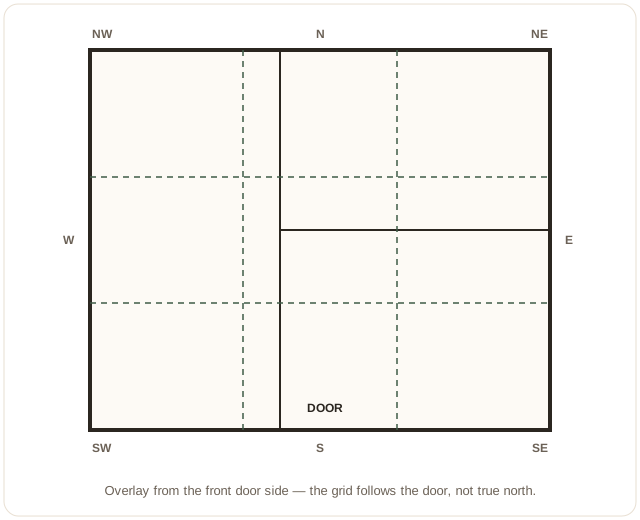
Use this as seasoning, not law. A painting you love in the "wrong" sector beats a painting you dislike in the "right" one, every time — because you live with the art, not the map. Find your sectors with the bagua map guide, then let personal taste lead and sector matching follow.
Start with one room and one question: does this picture match what this room is for? Swap one mismatched piece for a calmer or livelier one as the room requires, hang it at eye level with room to breathe, and notice how the room feels for a week. Art placement is one of the cheapest, fastest feng shui changes there is — and one of the few you can test in an afternoon.
Go deeper with the book
Feng Shui Made Simple covers every room this way — bedroom, living room, kitchen, office, entryway — with diagrams and a 7-day plan for doing the whole house.
Frequently asked questions
What art is best for the bedroom?
Calm, gentle imagery: soft landscapes, pairs of birds, abstract work in muted colors. Avoid aggressive, chaotic, or lonely imagery — a single figure walking away, storm scenes, or sharp abstract clashes — because the bedroom should feel restful and paired.
Should art face the front door?
Art opposite the front door is the first thing visitors see, so choose something welcoming and calm: a landscape, flowers, or an abstract in warm tones. Avoid art that feels aggressive or confrontational in that spot, since it sets the tone for the whole home.
How high should I hang artwork?
The center of the piece at about 145 to 150 centimeters from the floor, which is average eye level. Above a sofa or sideboard, hang it 15 to 20 centimeters above the furniture so the art and the furniture read as one group.
Is it bad feng shui to hang pictures of water in the bedroom?
Traditionally, large water imagery in the bedroom is discouraged because Water is an active element and bedrooms should be still. A small, calm water scene is fine for most people, but a dramatic waterfall or stormy sea belongs in a living area.
What about family photos — where do they belong?
Family photos belong in living areas and hallways, where they celebrate the household, and in the East sector, linked to family. Keep them out of the bedroom in large numbers — the bedroom is for the couple or the sleeper, not the whole extended family.