Water Element at Home: Black, Blue, and Flow
Water is the element of winter and of flow. In the five-element system it stands for reflection, wisdom, adaptability, and quiet depth — the energy of a still pool, a river finding its way around a rock, a mind that can sit quietly and think. At home, water shows up as black and dark blue tones, mirrors and glass, wavy and free-form shapes, and actual water: fountains, aquariums, and water features. Used well, it makes a room feel calm and deep. Used badly, it makes a room feel cold, dark, or stagnant.
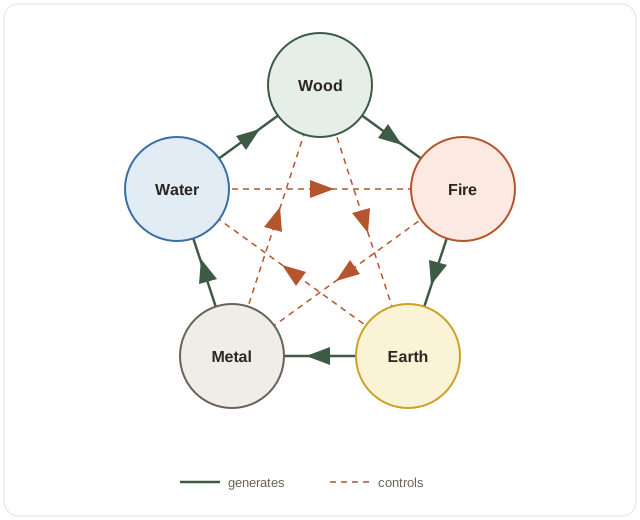
Water's place in the cycle is the key to using it. Metal feeds water, water feeds wood, earth controls water, and water controls fire. In plain language: water is supported by metal tones and objects, it supports plants and green, it is held back by earth tones and ceramics, and it calms fire. If a room feels too hot, too loud, or too tense, water is the element that cools it. If a room feels too cold or too still, water is the element to remove.
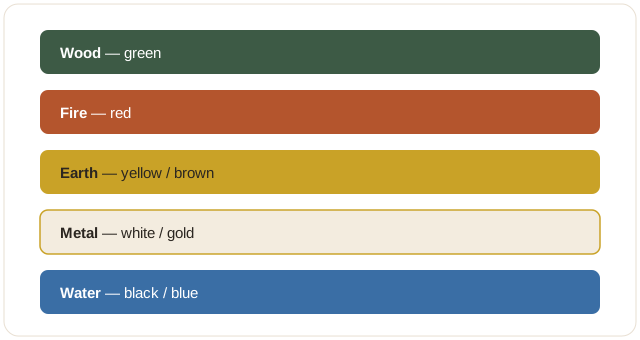
Water's colors are black, dark blue, and deep navy. Its shape is the wave and the free-form curve — nothing straight or angular. Its materials are glass, mirrors, and water itself. Its bagua home is the north, the Career sector. The five elements guide covers the cycle in full; this guide is about water in real rooms, where the most common mistake is confusing "water" with "dark and cold."
Black and blue: depth without darkness
Black is water's strongest color, and it needs the most care. A black accent wall in a well-lit room with good natural light can be striking and deep. A black room with poor light is simply dark. The rule is light first, color second: only use large areas of black or dark navy where the room gets real daylight or strong warm lighting. In most homes, black works best as an accent — a black frame, a black vase, dark blue bedding, a navy armchair — against lighter walls.
Dark blue is more forgiving than black, and it is the color most people actually want when they say they want water energy. A deep navy or slate blue calms a room without darkening it as aggressively as black, and it pairs beautifully with white, which is the metal that feeds water. A navy-and-white room — navy sofa, white walls, a glass coffee table — is a classic water-and-metal combination, and it feels clean and calm rather than cold.
Mid-blue and soft blue-grey are gentler waters: the color of a calm sea on a cloudy day rather than a deep ocean. These suit bedrooms and bathrooms, where the goal is relaxation rather than drama. Pale blue walls in a bedroom are one of the safest color choices in feng shui, because they calm without darkening, and they suit almost any other accent color you add later.
Mirrors, glass, and wavy shapes
Mirrors are water in solid form. A mirror is a reflective surface, and reflection is water's quality. That is why mirrors are powerful and why their placement matters so much: a mirror doubles whatever it reflects, brightens a dark space, and makes a small room feel larger. It is also why the rules exist — no mirror facing the bed, no mirror facing the front door directly, no mirror reflecting clutter. The mirrors guide covers the placements in detail, and the mirror-facing-bed guide explains the bedroom rule.
Glass works similarly at a smaller scale: a glass tabletop, a glass vase, a glass door panel all add a water quality of transparency and lightness. A glass-topped table in a small dining area, for instance, keeps the room feeling open where a solid wood table would block the view. But glass also shows every fingerprint and smear, and a dirty glass surface is worse than a clean solid one. If you choose glass, commit to keeping it clean.
Wavy and free-form shapes carry water energy without any color at all. A rug with a flowing pattern, a curtain that hangs in soft waves, an asymmetrical vase, a piece of art with curving lines — each adds a small amount of water. These are useful when a room needs calming but cannot take dark colors, like a small room with poor light. A wavy pattern in a pale color gives you water's flow without water's darkness.
Real water: fountains, aquariums, and the rules that matter
Actual water — a tabletop fountain, an aquarium, a water feature in the garden — is the strongest water cure, and the one with the most rules. The first rule is that moving water must be clean and actually moving. A fountain with stagnant, cloudy water is worse than no fountain: it is the image of stagnation, and it also breeds mosquitoes and smells. If you cannot commit to cleaning a fountain weekly, do not buy one. A picture of water, or a mirror, gives you most of the effect with none of the maintenance.
The second rule is placement. Water features traditionally go in the north, east, or southeast — the sectors where water either belongs or feeds wood. They do not go in bedrooms, where moving water disturbs rest, or in kitchens, where water and fire already compete. They also do not go under a staircase or in a dark corner where nobody sees them. A fountain should be visible, audible at a gentle level, and easy to reach for cleaning. The water features guide covers placement room by room.
Aquariums follow the same logic with one addition: living fish add a wood quality — life and growth — on top of the water. A clean, well-kept aquarium in a living room is a beautiful combination of water and life. A neglected tank with cloudy water and unhappy fish is the opposite. As with plants, the rule is simple: only keep what you can keep healthy.
Too much water, and how to warm it
Too much water feels cold, withdrawn, and heavy. Signs include a room that feels dark despite adequate lighting, a home where every room is blue, black, and glass with no warm tones anywhere, a feeling of isolation or low mood in a space, or a room that feels damp or chilly even when it is dry. The balancing element is earth, which controls water: add yellow or brown tones, ceramics, stone, or square shapes, and the room warms and firms up. Earth dams water the way a riverbank holds a river.
Water also needs a note about bathrooms, because bathrooms are already water rooms — full of running water, mirrors, glass, and tiles. The risk in a bathroom is not too little water but too much, plus the feeling that the room's energy drains away down the plughole. The bathroom guide covers the practical fixes: keep the door closed, keep the toilet lid down, add earth tones or a plant to balance the water, and keep the room clean and dry. Water's gift is depth and calm: give a home enough of it to think clearly, and balance it with warmth so the calm never turns cold.
Go deeper with the book
Feng Shui Made Simple covers every room this way — bedroom, living room, kitchen, office, entryway — with diagrams and a 7-day plan for doing the whole house.
Frequently asked questions
What is the water element in feng shui?
Water is the element of flow, reflection, wisdom, and quiet depth. At home it appears as black and dark blue tones, mirrors and glass, wavy shapes, and actual water features.
Can I put a water fountain in my bedroom?
No — moving water in a bedroom disturbs rest. Keep fountains and aquariums in living areas, ideally in the north, east, or southeast, where they are visible and easy to clean.
Is a mirror really a water element?
Yes. A mirror is a reflective surface, and reflection is water's quality. That is why mirrors brighten dark spaces and double whatever they reflect — and why their placement rules matter.
How do I warm up a room with too much water?
Add earth, which controls water: yellow or brown tones, ceramics, stone, or square shapes. Earth dams water the way a riverbank holds a river.
What if I cannot maintain a real fountain?
Do not buy one. A stagnant fountain is worse than none. A picture of water, a mirror, or dark blue accents give you most of the calming effect with none of the maintenance.