Protruding Corners: When a Room Sticks Out
A protruding corner is the mirror image of a missing one: instead of a piece absent from the floor plan, a room sticks out beyond the rectangle of the house. Extensions, bay windows, sunrooms, and garage conversions all create protrusions, and most of them start life as good ideas — more space, more light, a better view. The question feng shui asks is whether the sticking-out piece still belongs to the house, or has started to dominate it.
The rule of thumb is proportion. A protrusion that is smaller than about one-third of the side it sticks out from reads as a feature: a bay, a nook, a sunroom. A protrusion larger than that starts to read as a second building bolted onto the first, and the house's balance shifts toward it. This is a guideline, not a measurement with legal force, but it matches how these rooms feel in practice — a modest bay feels like part of the room; a huge extension with its own roofline feels like a separate place.
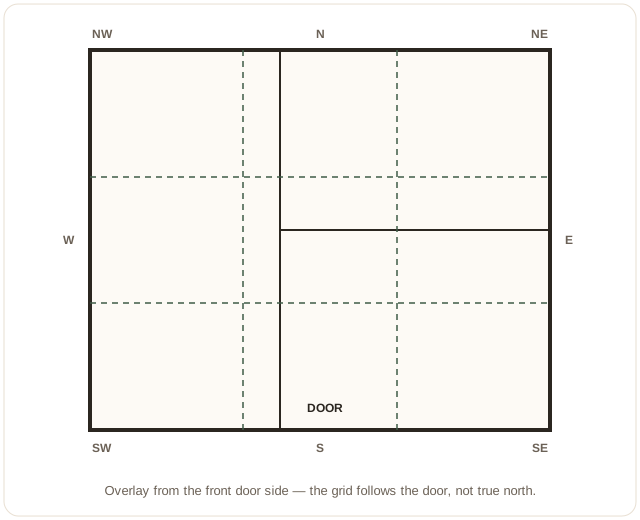
When a protrusion helps
Many protrusions are genuinely good design. A bay window in a living room adds light and a window seat. A sunroom on the south side adds the brightest room in the house. A small breakfast nook off the kitchen makes mornings better. In bagua terms, these extend the sector they sit in — a south sunroom extends Fame and Fire, a southeast breakfast nook extends Wealth and Wood — and extending a sector you want more of is not a problem, it is a bonus, provided the room is used and loved.
The test is use. A protruding room that is lived in every day — the reading chair in the bay, the plants in the sunroom, the table in the nook — is integrated into the house no matter what shape it is. A protruding room that becomes a dumping ground for boxes and broken furniture is the problem case: it is the part of the house that has stopped belonging. If you have a protruding room you never enter, the fix is not symbolic — it is to give the room a job, or to clear it and decide what its job should be.
When a protrusion dominates
The difficult version is the big, heavy extension: a double-storey block on one side, a garage conversion that doubles the house's footprint on one flank, a conservatory that is larger than the room it serves. These shift the house's visual weight, and they shift its practical life too — the family migrates into the extension, and the original rooms go quiet. The house starts to feel lopsided, with one loud wing and one forgotten half.
The balancing fix is to strengthen the opposite side. If the extension sticks out to the east, give the west side attention: use the west rooms properly, light them in the evening, put something worth looking at there. Balance in a home is not symmetry — few houses are symmetrical — it is equal care. A house where every side is used and maintained does not feel lopsided, whatever its outline. The bagua guide shows how the sectors relate, so you can see which side needs the counterweight.
Sharp corners and the rooms they point at
A protruding room creates outside corners, and outside corners point at things — at the garden, at a neighbour's house, at the street. Tradition calls these sharp corners poison arrows, and the practical complaint is simpler: a sharp external corner is a hard, exposed edge in a place people walk past. The fix is planting: a shrub or a climber at the protruding corner softens the edge, gives birds somewhere to go, and stops the corner looking like a defensive wall. The poison arrows guide covers sharp corners inside and out.
Inside, a protruding room creates the opposite geometry: the main room gains an inside corner where the extension joins it. Inside corners are where clutter gathers and where light does not reach, so they need a job — a floor lamp, a plant, a chair — rather than being left as dead space. A corner with a lamp in it stops being a dead corner and becomes a reading spot.
Roofs, weight, and the look of the thing
A protruding room with a roof that clashes with the main roof — different pitch, different material, a flat roof butted against a pitched one — looks like an afterthought, and that visual judgement affects how the whole house feels, including its resale appeal. If you are planning an extension, matching the roofline is worth more than matching the paint. The floor plan guide helps you sketch the whole outline before committing. If you already have a clash, planting that grows up and over the junction softens it more cheaply than rebuilding.
Weight matters too. A heavy masonry extension on one side and a light timber sunroom on the other is a real imbalance in how the house weathers and settles, not just how it looks. Keep an eye on the junctions — cracks where an extension meets the original wall are common and usually cosmetic, but a crack that widens year by year is a structural question for a professional, not a feng shui one.
Protrusions and the bagua, sector by sector
Which sector protrudes changes the flavour of the effect. An east protrusion adds morning light and growing energy — usually welcome. A north protrusion adds a cool, quiet room — good for a study. A south protrusion adds sun and visibility — good for a living room, tiring for a bedroom. A west protrusion adds evening light — good for dining. None of these is bad in itself; the question is always whether the room suits the sector it extends. A bedroom in a south glass box will be too hot; a study in a north protrusion will be just right. Match the room's use to the sector's character, and the protrusion becomes an asset.
If the protruding room is a garage or a utility space, the reading changes: the sector it extends is occupied by cars or machines rather than people, and that sector's life-area gets less human attention. The fix is the same as for any underused room — give the sector a human use somewhere, even a small one. A plant and a chair on the garage's far side, or a properly used room on the opposite side of the house, restores the balance without moving any walls.
A protrusion is not a defect. It is extra space that needs to earn its place in the house — by being used, by being maintained, and by not overwhelming the side it sticks out from. Give it a job, soften its corners with planting, and look after the opposite side, and the sticking-out room becomes the favourite room, which is usually what it was built to be.
Go deeper with the book
Feng Shui Made Simple covers every room this way — bedroom, living room, kitchen, office, entryway — with diagrams and a 7-day plan for doing the whole house.
Frequently asked questions
Is a protruding corner bad feng shui?
Not by itself. A modest protrusion that is used and loved — a bay window, a sunroom, a breakfast nook — is a feature. It becomes a problem only when it is so large it dominates the house, or when it becomes an unused dumping ground.
How big is too big for a protrusion?
As a rule of thumb, a protrusion larger than about one-third of the side it sticks out from starts to read as a second building rather than a feature. That is a guideline for how the house feels, not a structural rule.
What is the difference between a missing and a protruding corner?
A missing corner is a piece absent from the floor plan; a protruding corner is a piece added beyond the rectangle. Missing corners are read as an absence in that bagua sector, protruding corners as an excess. The companion missing corners guide covers the other half.
How do I soften a sharp outside corner?
Planting: a shrub or climber at the protruding corner softens the edge, gives wildlife somewhere to go, and stops the corner looking defensive. Inside, give the corner where the extension joins the main room a lamp or a chair so it does not become dead space.
Should I avoid buying a house with a big extension?
Not necessarily — judge the extension on its own merits. Is it well built, does its roof match, is it used daily, and are the original rooms still lived in? A good extension that is properly integrated is a selling point, not a warning sign.