Feng Shui for Creativity and Inspiration
Creativity dies in rooms where starting is hard: materials buried in boxes, no surface to spread out on, a space so tidy that making a mess feels like a crime, or so cluttered that finding anything takes twenty minutes.
The creative space has one job: make starting easy. That means materials within reach, a surface big enough for the work, light that flatters what you are making, and permission — built into the room — for mess during making and order after it. One honest limit: no arrangement guarantees creativity, inspiration, or any artistic outcome. What a good space does is remove the friction between wanting to make something and actually making it, and that friction is where most creative intentions quietly die.
The west sector: creativity in the bagua
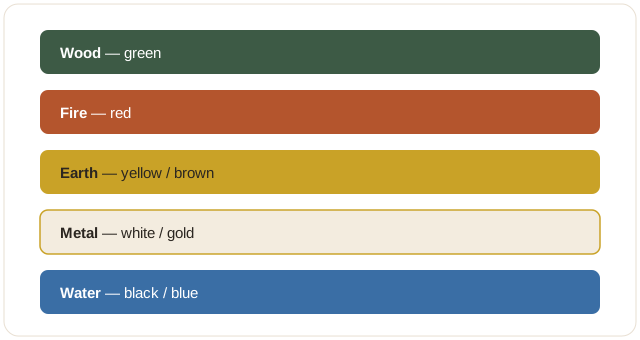
In the bagua map, creativity belongs to the west sector, shared with children, and its element is Metal — white, silver, and gold, round shapes, and the qualities of clarity and refinement. Keep the west bright, tidy, and open: white or pale walls, a round mirror or round table, metallic accents, and, above all, empty space. Creativity needs room — literal room — to spread out, to step back from the work, to see it from a distance. A west crammed floor-to-ceiling with storage leaves no room for anything new, which is a fairly literal picture of a blocked imagination. The west sector guide covers the sector in detail.
Earth produces Metal, so earth tones — beige, sand, light brown — support the west as a calm base. Keep strong Fire in check here, since Fire controls Metal: a large red feature wall in the west works against the sector's clarity. But creativity also needs some stimulation, so a white west with one vivid accent — a colorful painting, a bright textile, a shelf of vivid materials — usually beats a room painted entirely in a single energizing color. The accent is the spark; the calm base is what lets you hear it.
A surface big enough for the work
The most common creative-space failure is a surface too small for the medium. A painter needs a table that holds the canvas, the palette, and the water jar without stacking. A writer needs a desk with room for notes beside the keyboard. A sewer needs a table that holds fabric flat. Measure your work, not your room: the surface should be at least a third larger than the work itself, so tools have a place and the work has breathing room.
If space is tight, use a fold-down table, a large board that rests on a table and stores against a wall, or a kitchen table cleared for a session. The key is a setup that takes minutes, not an hour: a creative corner that sets up in five minutes gets used daily, while a creative room that needs an hour of preparation gets used on holidays. Keep materials in a portable kit — a box, a bag, a trolley — so "starting" means opening the kit, not hunting through the house.
Light that flatters the work
Creative work is visual work, and light decides what you actually see. Natural daylight from the side is best for most making — painting, drawing, crafting, sewing — because it shows true color and soft shadow. If you work at night, use a bright, adjustable task lamp with good color rendering, plus softer room light so your eyes are not straining between a bright work surface and a dark room. The light guide covers layering, and it matters for creativity more than for almost any other activity: bad light makes colors lie, and lying colors make bad decisions.
Position matters too. Face your work with light coming over your shoulder or from the side, not glaring into your eyes or casting your own shadow across the page. If you paint or draw, a north-facing window (in the northern hemisphere) gives steady, indirect light that does not change dramatically through the day — a traditional studio choice for a practical reason.
Inspiration kept visible
Creative rooms need visible inspiration: works in progress on the wall, a board of images that excite you, books open rather than shelved, a shelf of materials you can see and touch. Out of sight is out of mind, and a creative practice that lives in closed boxes is a practice you forget you have. Hang unfinished work, not just finished work — unfinished work asks to be continued, while finished work only asks to be admired.
But visible does not mean chaotic. One board, one shelf, one wall section for inspiration — curated, changed regularly, with old items removed when new ones arrive. A board that never changes becomes wallpaper within a week; a board you update monthly stays alive. Rotate: when you finish a project, take its images down and put up the next project's seeds. The room should show where you are going, not only where you have been.
Mess during, order after
Creative work is messy, and a creative space must allow mess — during making. The rule that makes this sustainable is a clear boundary: mess is allowed on the work surface during a session, and cleared at the session's end. Tools go back in the kit, scraps go in the bin, the surface is wiped. This takes five minutes and it is what makes the next session startable. A creative space that is never cleared becomes a storage room within a month, and a storage room does not invite making.
Protect the rest of the home from creative mess with a defined zone: a drop cloth, a tray, a table that is understood to be the making table. Housemates tolerate creative mess far better when it stays in its zone and disappears on schedule. The small apartments guide has more on zones in tight spaces, and the home office guide covers the desk setup if your creative work is digital.
Play, children, and the west
The west is shared with children for a reason: creativity and play are the same activity at different ages. If you have children, let the west be a place where play is welcome — a corner for drawing, building, and making noise, without the pressure of a finished product. Adults who play with their children often find their own creative work loosens up too. And if you do not have children, borrow the principle anyway: schedule play into your creative practice — an hour with no goal, no product, just materials and curiosity. The most original work often comes from the hour that was not supposed to produce anything.
A creative routine for the space
- Before: open the kit, clear the surface to the current project, put inspiration for this project in view.
- During: work with light from the side, phone elsewhere, mess allowed on the surface.
- After: five-minute clear-up — tools back, scraps binned, surface wiped, next step noted.
- Weekly: update the inspiration board; remove one old item for every new one.
Creativity is a practice, not a visitation, and practices live in rooms. Give yours a surface big enough, light that tells the truth, inspiration in view, and a five-minute ending ritual — and then show up in it regularly. The room will not make you creative. It will make being creative the easy option, day after day, which is the most any room can honestly do.
Go deeper with the book
Feng Shui Made Simple covers every room this way — bedroom, living room, kitchen, office, entryway — with diagrams and a 7-day plan for doing the whole house.
Frequently asked questions
What is the creativity sector of the bagua?
The west sector, shared with children, whose element is Metal. Its colors are white, silver, and gold, and its shapes are round. Keep the west of your home bright, tidy, and open, with room for play and making.
Can feng shui make me more creative?
No arrangement guarantees creativity, inspiration, or any artistic outcome. What a good creative space can do is lower the barriers to starting: materials within reach, room to spread out, light that flatters the work, and a place where mess is allowed during making and cleared after.
What colors help creativity?
Metal whites and golds suit the west, supported by Earth tones, since Earth produces Metal. But creativity also needs stimulation: a white room with one vivid accent — a colorful artwork, a bright textile — usually beats a room painted entirely in one energizing color.
I have no spare room for creative work. What can I do?
Use a portable kit: a box or bag holding your materials, a table that clears in minutes, and a wall or board for works in progress. A creative corner that sets up in five minutes gets used; a creative room that needs an hour of preparation does not.