Blue and Black in Feng Shui: Calm, Depth, and Water
Blue and black are water's colors, and they are the colors of calm. In feng shui, they stand for depth, reflection, wisdom, and quiet — the energy of deep water, a night sky, a mind at rest. Used well, they make a room feel peaceful, focused, and spacious in a way no other colors can. Used without care, they make a room feel cold, dark, and withdrawn. This guide covers both blues and black together, because they work as a family and fail in the same ways.
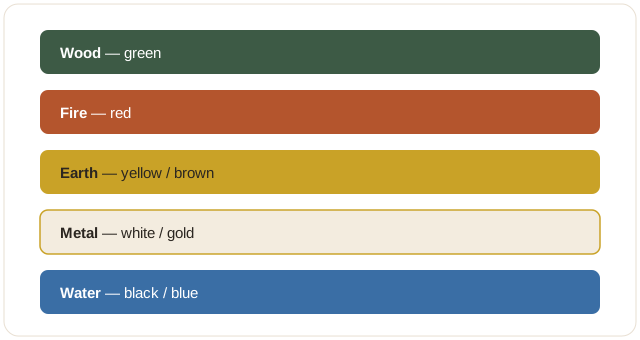
Blue and black share water's cycle: metal feeds water, so white and gold support them; water feeds wood, so blue and black support green and plants; earth controls water, so yellow and brown hold them back; water controls fire, so blue and black calm red and bright light. Their bagua home is the north, the Career sector. Their shapes are waves and free curves. The water element guide covers the element in full; this guide is about the two colors and how to live with them.
The first thing to understand is that blue is not one color. Pale sky blue, mid denim blue, deep navy, and near-black midnight are different tools. Pale blue calms gently and suits almost any room. Mid blue adds character without darkness. Navy adds drama and depth but needs light. Black adds the most depth and the most risk. Choosing between them is mostly a question of how much light the room gets and how much calm you want.
Pale blue: the safest calm color
Pale blue is one of the safest colors in home decorating, and it deserves its reputation. A pale blue bedroom, bathroom, or study feels calm without feeling cold, fresh without feeling clinical, and it suits almost any furniture you already own. It is also the blue least likely to clash: pale blue works with white, wood, grey, green, and even warm accents like terracotta. If you want water's calm without any risk, pale blue walls are the answer.
Pale blue suits bedrooms especially well, because it lowers the visual temperature of a room without darkening it. A pale blue bedroom with white bedding and wooden furniture is restful in a way that is hard to get wrong. It also suits bathrooms, where it reads as clean water, and children's rooms, where it calms without the heaviness of dark tones. The one place pale blue struggles is a room with cold, grey northern light and no warm elements — there it can feel chilly, and the fix is warm lighting and a warm rug or wooden piece, not repainting.
Mid blue and navy: character and depth
Mid blues — denim, slate, dusty blue — are where blue gets personality. A mid-blue sofa, a denim accent wall, slate blue kitchen cabinets: these make a room feel considered and calm at the same time. Mid blue suits living rooms and home offices particularly well, because it supports focus without the intensity of dark colors. In an office, mid blue is one of the best wall colors for concentration: calm enough not to distract, strong enough to feel like a real room rather than a blank box.
Navy is blue's dramatic register. A navy accent wall behind a bed, a navy sofa in a bright living room, navy cabinets in a sunny kitchen — each adds depth and seriousness. Navy needs light and contrast: pair it with white trim, warm wood, or brass, and it looks luxurious. Pair it with grey walls and dim light, and it looks muddy. The rule is that navy should always have a lighter partner nearby — white, cream, pale wood, or a bright textile — so the eye has somewhere to go after the dark.
Navy also suits the north sector and career spaces, traditionally, because north is water's direction. A home office in the north of the home, painted in mid or navy blue with white trim, is a textbook water arrangement. But the sector is a guide, not a rule: a navy office in any part of the home works just as well if the light and contrast are right.
Black: depth in small doses
Black is water's deepest color, and it works best as an accent, not a background. A black picture frame, a black vase, a black lamp base, a black front door — each adds depth, contrast, and a sense of definition. Black defines edges: it makes the colors next to it look cleaner and more deliberate. That is why a room with a few black accents often looks more designed than a room with none, even when everything else is the same.
Large areas of black need justification. A black accent wall can work in a bright room with high ceilings and white trim, where it creates a dramatic focal point. A black kitchen island in a white kitchen can anchor the room beautifully. But whole black rooms, or black walls in dark rooms, usually feel oppressive rather than dramatic. The test is light: if the room gets strong daylight and has white or warm elements to balance the black, it can work. If it does not, keep black to accents.
Black in the bedroom deserves caution. Black bedding and black walls together can make a bedroom feel like a cave — restful for some, oppressive for others. If you love black in the bedroom, use it as an accent — a black headboard, black frames, a black throw — against lighter walls and bedding. You get the depth without sleeping inside a dark box.
Blue, black, and the rest of the palette
Blue and black pair best with the colors that feed or balance water. With white and gold — metal — they feel crisp and clean: the classic navy-and-white room, the black-and-brass detail. With green — wood, which water feeds — they feel natural and deep: navy and sage, black and olive. With earth tones — yellow, brown, terracotta — they feel grounded: a navy sofa with a terracotta rug, a blue room with wooden floors. The earth pairing is also the practical cure when a blue room feels too cold: add a warm rug, a wooden piece, or a terracotta pot, and the room warms up.
The pairing to watch is blue and black with too much grey. A room of blue-grey, grey, and black with no warm element can feel like a rainy day indoors — calm at first, then low. If your blue room feels flat, the missing ingredient is usually warmth, not more blue: a warm lamp, a wooden frame, a cream cushion. Water needs a shore. A blue room with nothing warm in it is water without land.
Finally, a note on the annual stars: blue and black are water tones, and water is the element that calms fire stars. In a sector holding a hot fire star — the 9 Purple in the center in 2027 and the northwest in 2028, or the 7 Red in the east in 2027 and the southeast in 2028 — blue and black tones are a sensible calming choice. Check the 2027 chart and the 2028 chart before repainting, and use water tones where calm is needed rather than adding more red. Blue and black's gift is depth: used with light and warmth, they give a home a quiet center that nothing else can.
Go deeper with the book
Feng Shui Made Simple covers every room this way — bedroom, living room, kitchen, office, entryway — with diagrams and a 7-day plan for doing the whole house.
Frequently asked questions
What do blue and black mean in feng shui?
They are water's colors: calm, depth, reflection, and wisdom. Blue ranges from gentle pale blue to dramatic navy; black is water's deepest, most intense color.
Is pale blue good for a bedroom?
Yes — pale blue is one of the safest bedroom colors. It calms without darkening and suits white bedding and wooden furniture. Add warm lighting if the room has cold northern light.
Can I paint a wall black?
A single black accent wall can work in a bright room with high ceilings and white trim. Whole black rooms, or black walls in dark rooms, usually feel oppressive. Keep black to accents unless the light justifies more.
How do I warm up a blue room that feels cold?
Add earth tones, which control and balance water: a warm rug, wooden furniture, a terracotta pot, or warm lighting. Water needs a shore — a blue room with nothing warm feels flat.
Do blue and black help with hot fire-star sectors?
Yes, water calms fire. In sectors holding the 9 Purple or 7 Red stars, blue and black tones are a sensible calming choice instead of adding more red.