Jade Plant: The Friendship Plant by the Door
The jade plant (Crassula ovata) has two names that explain its popularity. Its thick, round leaves look like coins, so it is called the money plant. And it propagates so easily that it is called the friendship plant: a cutting from a friend's jade becomes your jade, and cuttings from yours go on to other friends. A plant that can live for decades, survive neglect, and be shared endlessly is a fitting symbol for a friendship — and for a household's steady growth.
This guide covers the classic placement — by the front door — and the care that lets a jade plant live long enough to deserve its reputation. The care is simple but unforgiving in one direction: jade plants forgive drought and punish overwatering.
Why by the door
The traditional spot for a jade plant is near the front door, inside the home, where it greets everyone who arrives. The logic combines symbolism and practicality: the entryway is where guests are welcomed and where the household's outward face is presented, so a thriving, coin-leaved plant there says the home is prosperous and welcoming. It is also, frankly, a spot where the plant gets noticed — and a plant that gets noticed gets watered, while a plant hidden in a back room gets forgotten.
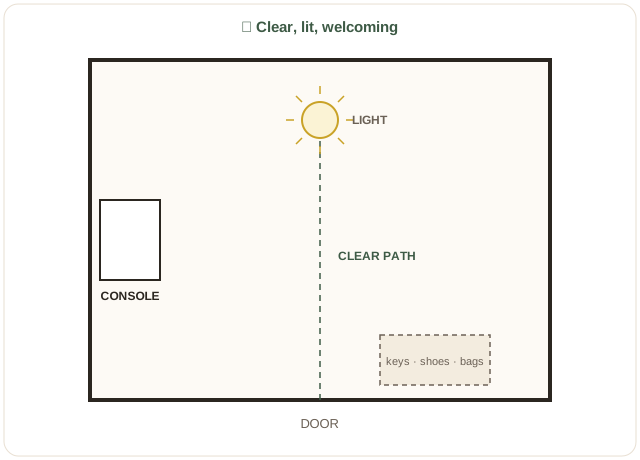
The entryway only works if it has light. Jade plants need several hours of bright light a day, ideally some direct morning sun. A dark entryway will slowly weaken a jade plant: leaves drop, stems stretch pale and leggy toward the nearest light, and the plant looks sad rather than welcoming. If your entryway is dark, the plant belongs on a bright windowsill instead — the entryway guide notes the same tradeoff for every entryway plant — and a small green accent or a picture can carry the doorway symbolism. The plants guide puts it generally: light first, placement second.
Size matters at the door. A jade plant by the entrance should be large enough to notice but small enough not to block the path: a tabletop plant on a console, or a medium floor plant beside — never in front of — the door swing. A plant that forces visitors to sidestep is not welcoming, whatever its symbolism.
Watering: less than you think
Jade plants are succulents. Their thick leaves store water, which means they tolerate drought far better than flood, and their care resembles a cactus more than a leafy houseplant. The routine: water thoroughly until it drains from the pot, empty the saucer, then wait until the soil is dry almost all the way through before watering again. Indoors that usually means every two to three weeks, less in winter. A pot with drainage holes is not optional — without them, even careful watering accumulates into rot.
Overwatering shows as leaves that turn yellow, feel soft, and drop at a touch, and a stem that goes soft at the base. Underwatering shows as leaves that wrinkle and thin but stay firm on the stem; a good soak revives them. If you are unsure, wait: a jade plant would rather be thirsty for a week than wet for a day. Use a gritty, well-draining mix — ordinary potting soil with added perlite or coarse sand — rather than moisture-retaining soil, and use a heavy pot (terracotta is ideal) so a top-heavy older plant cannot tip.
Light, pruning, and a long life
Give a jade plant the brightest spot you have short of harsh all-day summer sun through south glass, which can scorch leaves. A few hours of direct morning sun is ideal and brings out the red edges on the leaves that give the plant its color. If the plant stretches and the gaps between leaves widen, it is asking for more light — move it gradually, not all at once, to avoid sunburn on leaves grown in shade.
Prune in spring to keep the shape compact and tree-like: cut leggy stems back to just above a leaf pair, and the plant will branch from that point. Every cutting is a potential new plant — let the cut end dry for two to three days until it calluses, then set it in dry, gritty soil and water lightly only once roots form. This is the friendship-plant tradition in action: the prunings of your plant become gifts, and a gift that grows is a better gift than one that fades. Older jade plants develop thick, woody trunks and can live forty years or more, becoming genuine household heirlooms passed between generations.
Common problems and how to fix them
Most jade plant problems trace back to water or light, and both are easy to diagnose. Leaves dropping while still plump and green usually means overwatering or a sudden cold draft — check the soil, let it dry, and move the plant away from a cold window. Leaves wrinkling and thinning mean the plant is thirsty; a thorough soak will plump them within days. A stem that goes soft and dark at the base is rot, and the fix is to cut above the rot into healthy green stem, let the cutting callus for several days, and root it as a new plant — the original pot may not recover, but the cutting usually does, which is another form of the friendship tradition.
Leggy growth — long bare stems with leaves only at the tips — means too little light. Move the plant gradually toward brighter light over a week or two, then prune the leggy stems back in spring; the pruned stems become cuttings, and the plant branches from the cuts into a fuller shape. White mealybugs sometimes cluster in leaf joints; dab them with a cotton swab dipped in rubbing alcohol and repeat weekly until clear. A jade plant that is watered sparingly, given bright light, and pruned once a year will outlive most of the furniture around it.
One safety note: jade plants are toxic to cats and dogs if eaten, causing vomiting and lethargy. In a household with pets that chew plants, keep the jade out of reach — on a high console or a shelf — or choose a pet-safe plant instead, such as a lucky bamboo kept where pets cannot reach its leaves either. Beauty and safety both matter; a plant that worries you is not doing its job.
Placed by a bright door, watered sparingly, and shared as cuttings, the jade plant earns both its names: a small, round-leaved reminder of steady growth at the threshold of the home, and a friendship that propagates.
Go deeper with the book
Feng Shui Made Simple covers every room this way — bedroom, living room, kitchen, office, entryway — with diagrams and a 7-day plan for doing the whole house.
Frequently asked questions
Why is the jade plant called the friendship plant?
Because it is traditionally given between friends and propagates so easily that the gift keeps going: a cutting from a friend's plant becomes your plant, and cuttings from yours go on to other friends. The plant's long life also suits a lasting friendship.
Where should a jade plant go?
By the front door or in the entryway is the classic spot, where it greets arrivals, or anywhere with bright light. It needs several hours of bright light daily, so a dark hallway will weaken it even if the symbolism is right.
How often should I water a jade plant?
Water thoroughly, then let the soil dry out almost completely before watering again — typically every two to three weeks indoors. Jade plants are succulents that store water in their leaves, so overwatering rots them faster than underwatering harms them.
Is the jade plant toxic to pets?
Yes, jade plants are toxic to cats and dogs if eaten, causing vomiting and lethargy. Keep them out of reach of pets that chew plants, or choose a different plant for a pet household.
How do I propagate a jade plant cutting?
Snap or cut a healthy stem, let the cut end dry for two to three days until it calluses, then place it in dry, well-draining soil. Water lightly only after roots form, usually within a few weeks. A single leaf pressed into soil will also root, more slowly.