Garden and Yard Feng Shui: Paths, Plants, and Boundaries
The garden is the first thing visitors see and the last thing they remember. It is also the home's lungs: the place where air, light, and weather meet the house, and where the household meets nature without leaving home. A garden that is cared for makes the whole property feel cared for. A garden that is overgrown, bare, or chaotic drags the house down with it, however nice the interior is.
Feng shui reads a garden the way it reads a house: as a flow of energy. The path brings energy to the door. The planting shapes and softens it. The boundaries hold it in. The open spaces let it gather. Get those four things right and the details mostly take care of themselves.
You do not need a large garden, a designer, or a big budget. The principles below work on a courtyard, a suburban yard, and a narrow strip of soil beside a townhouse. They also work slowly — a garden is the one part of feng shui where patience is not optional.
Paths: guide energy to the door, gently
The path from the street or gate to the front door is the garden's most important feature. In feng shui, a straight, narrow path rushing directly at the door pushes energy too fast — and practically, a straight concrete runway to the door looks harsh and feels exposed. A path that curves gently, even slightly, slows the approach, frames the house, and makes arriving feel like an arrival rather than a delivery.
You do not need to rebuild a straight path to fix it. Planting along one side, a stepping-stone border, a bend created by a shrub or a planter, or a change of material halfway along — any of these breaks the rush and softens the line. The goal is a path that invites walking, not one that hurries it.
Keep paths clear, level, and wide enough for two people to walk side by side where possible. Overhanging branches at head height, broken paving, and slippery moss are hazards first and feng shui problems second — fix them before anything decorative. A path that is safe and clear at night matters too: a few low lights along the path make the garden welcoming after dark and prevent the falls that dark gardens cause.
Planting in layers
Good gardens plant in layers, the way nature does: trees at the back or sides for height and shelter, shrubs in the middle for structure, and flowers, herbs, and ground cover at the front for color and softness. Layered planting looks fuller, supports more birds and insects, and — in feng shui terms — creates a protected, embracing feeling around the house rather than an exposed one.
Choose plants for your soil, light, and climate before choosing them for looks. A plant struggling in the wrong conditions needs constant rescue and still looks unhappy; a plant suited to the spot thrives with little attention. Native and locally adapted plants are the easy choice here, and your local nursery will know them. Mix evergreen structure (for winter shape) with seasonal color (for change through the year) so the garden never looks dead for months at a time.
Keep plants healthy and pruned. Dead branches, diseased plants, and thorny overgrowth crowding the door are the garden equivalents of clutter indoors — they signal neglect and they block the path, literally and visually. A monthly walk with secateurs, removing dead wood and cutting back anything blocking paths or windows, is the single highest-value garden habit. The plants guide covers plant choices and placement in more detail.
Boundaries: fences, hedges, and feeling held
Boundaries define the garden as a place. A fence, hedge, or wall that is in good repair tells everyone — including you — where your space begins and the world ends. In feng shui, a solid but not fortress-like boundary is ideal: it holds the home's energy in and gives privacy, without shutting the house off from the street and neighbors entirely.
Hedges are the softest boundary and often the best: they grow, they breathe, they shelter birds, and they look alive in a way a fence never does. A hedge needs trimming twice a year to stay dense and tidy. Fences need the opposite care — checking for rot, loose boards, and leaning posts, and repairing them before a small problem becomes a collapsed section. Either way, a boundary in good repair matters more than which type you choose.
Height is a judgment call. A boundary high enough for privacy in the seating area, lower near the street so the house stays friendly and visible, is the usual balance. A six-foot wall all around a small front garden makes the house feel hidden and defensive; no boundary at all makes it feel exposed. Match the boundary to the street: on a quiet lane, less is more; on a busy road, more is kind.
A place to gather
Every garden needs a place where people actually sit — a patio, a deck, a flat patch of lawn with chairs, a bench under a tree. Without one, the garden is scenery you look at through glass, and scenery you never enter does not do much for anyone. The gathering place should be reasonably flat, reasonably sheltered from wind, and close enough to the house that carrying food and drinks out is easy.
Shade makes or breaks a gathering place in summer. A tree, a pergola, a shade sail, or an umbrella — any of these turns a sun-baked patio into a place people stay. In feng shui terms, shade is yin balance for the sun's yang: the garden needs both, and a place that is all sun or all shade gets used half the year at best.
Water features belong here or near the gathering place, not hidden in a corner. A small fountain or birdbath adds sound and movement, and moving water is traditionally associated with wealth and flow — but keep it modest, clean, and working. A stagnant, algae-filled water feature is worse than none at all. See water features for placement and maintenance.
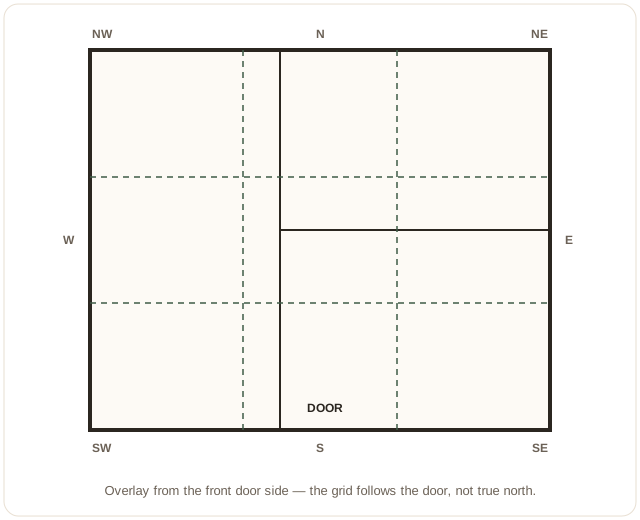
The bagua in the garden
If you know your home's bagua — the nine-area map explained in the bagua guide — you can lay it over the whole property, garden included. The area of the garden that falls in your wealth corner might get your most generous planting; the relationship corner might get the seating for two; the health center might stay open and clear. This is optional and symbolic, not a rule — but it is a pleasant way to plan a garden with intention instead of impulse.
One practical note for 2027: the year's flying stars mark three areas to leave undisturbed by major digging or renovation — the West (2 Black with San Sha), the North (5 Yellow), and the Northeast (Year Breaker). If you are planning heavy garden work in 2027, do it in other areas, or wait. Ordinary planting and maintenance are fine everywhere; it is major ground-breaking that tradition advises against in those sectors. The full chart is on the 2027 flying stars page.
Maintenance: the real feng shui
A garden's feng shui is mostly its maintenance. Mow or trim regularly, weed the paths, clear fallen leaves from drains, and keep the front area — the part visitors see — tidy even when the back is mid-project. A garden that is a little wild but clearly loved feels alive. A garden that is wild because nobody goes there feels abandoned, and people can tell the difference instantly.
Compost is the garden's quiet hero: kitchen scraps and garden waste become soil, the loop closes, and the garden feeds itself. Keep the compost bin tidy, sited away from the house door (for smell and flies), and turned occasionally. A working compost heap is feng shui in action — waste becoming nourishment, nothing discarded that can be renewed.
Start with the path: clear it, light it, and soften one straight run with planting. Then the gathering place — a chair outside, today. Then the monthly pruning walk. A garden improves on the same schedule it grows on: slowly, visibly, and all the more satisfyingly for it.
Go deeper with the book
Feng Shui Made Simple covers every room this way — bedroom, living room, kitchen, office, entryway — with diagrams and a 7-day plan for doing the whole house.
Frequently asked questions
Should the path to my front door be straight or curved?
Gently curved is the classic feng shui preference: a straight, narrow path rushes energy at the door, while a curve slows the approach and makes arriving feel welcoming. You do not need to rebuild a straight path — planting along one side or a bend made by a shrub softens it.
How do I use the bagua in the garden?
Lay the nine-area bagua map over your whole property, garden included. The wealth corner might get generous planting, the relationship corner seating for two, the health center open clear space. It is a planning aid with symbolic meaning, not a strict rule.
What should I avoid digging up in 2027?
Tradition advises against major ground-breaking in the West (2 Black with San Sha), the North (5 Yellow), and the Northeast (Year Breaker) during the 2027 flying stars year. Ordinary planting and maintenance are fine everywhere — it is heavy renovation and digging that should wait or move elsewhere.
How high should a garden fence be?
High enough for privacy in the seating area, lower near the street so the house stays friendly and visible. A tall wall all around a small front garden feels defensive; no boundary at all feels exposed. Match it to the street — busier road, higher boundary.
What is the most important garden maintenance habit?
A monthly walk with secateurs: remove dead wood, cut back anything blocking paths or windows, and check the front area visitors see. A garden that is a little wild but clearly loved feels alive; one nobody visits feels abandoned.