Aquariums in Feng Shui: How Many Fish, Which Direction
Water is feng shui's most powerful element. The Chinese word for water sounds like the word for wealth, and moving water has symbolized the flow of prosperity for centuries — which is why an aquarium is the most ambitious water feature you can bring indoors, and the one with the most rules attached. Those rules are worth knowing, but they come with a warning this guide will repeat: an aquarium is a living ecosystem first and a symbol second. A neglected tank with cloudy water and sick fish is not a wealth symbol; it is a visible sign of neglect in the middle of your living room.
Get the ecosystem right, and the symbolism takes care of itself. Get it wrong, and no fish count will save it.
How many fish: the traditional guideline
The question everyone asks first is the count, so here it is plainly: a common traditional guideline is nine fish — eight red or gold fish and one black fish. The nine is associated with completion and good fortune, the red and gold with prosperity, and the black fish is traditionally said to absorb negative energy. Some traditions use eight, or a single fish, or multiples of nine for large tanks.
This must be framed honestly: it is a traditional guideline, not a verified fact, and it promises nothing. No fish count creates wealth, and any source claiming otherwise is selling something. What the count genuinely does is give a tank a balanced, intentional look — a school of gold fish with one dark contrast fish is simply beautiful — and give the keeper a reason to pay attention. The count that matters for the fish is the stocking level: the tank must be large enough, filtered enough, and maintained enough for every fish in it. A nine-fish guideline in a tank sized for three is animal cruelty with a lucky label on it. Choose the tank size first, the fish second, and the traditional count only if it fits both.
Which direction, which room
Traditionally, aquariums suit the North, East, and Southeast sectors. North is the Water sector itself, so Water belongs there naturally. East and Southeast are Wood sectors, and in the generating cycle Water nourishes Wood — so a Water feature in a Wood sector is considered supportive. The South, a Fire sector, is traditionally avoided for large tanks, because Water controls Fire in the controlling cycle and the clash is considered unsettling.
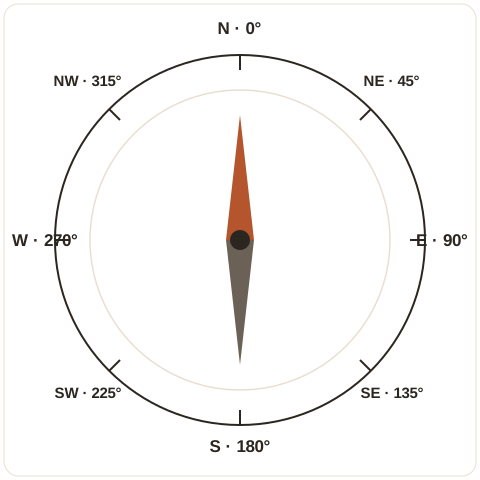
Room matters more than sector. The living room is the classic aquarium room: it is where the tank is seen, enjoyed, and maintained, and where moving water suits an active social space. The home office is a reasonable second choice. Two rooms are traditionally excluded, for practical reasons that need no mysticism: the bedroom, because the pump's hum, the light, and the moving water all work against rest, and the kitchen, because it already has its own Fire and Water in the stove and sink, and a large tank adds humidity and clutter to a working room. Never place a tank where it blocks a doorway, sits under a bedroom (a leak risk and a weight risk — water is heavy, roughly a kilogram per liter), or faces the front door directly, where tradition says wealth flows straight back out.
Use a compass to find the sector properly rather than guessing from the room layout; the compass reading guide explains how, and the water features guide covers smaller water features if a full aquarium is more than you want.
Size, stand, and the weight nobody plans for
Size is the decision people underestimate most. A tank that looks modest in a shop becomes a major piece of furniture at home: a 100-liter tank weighs over 100 kilograms when full, needs a dedicated stand (never a bookshelf or a side table), and needs a nearby power outlet for filter and heater plus space behind it for maintenance. Plan the stand, the power, and the water-change route — bucket to sink and back — before buying the tank. A tank that is hard to maintain will not be maintained, and an unmaintained tank is the worst version of this symbol.
Choose fish for the tank and your experience, not for the symbolism alone. Hardy community fish — tetras, danios, guppies, corydoras — suit beginners and small-to-medium tanks. Goldfish need far more space than shops suggest: at least 75 liters for one fancy goldfish, more for common goldfish, with strong filtration. A small bowl with a goldfish is not a feng shui feature; it is a short, unhealthy life for the fish and a cloudy bowl in your home. If a full aquarium feels like too much, a well-kept small tank with a betta or a few shrimp is a better choice than a large tank you cannot maintain.
Maintenance: the real feng shui of a tank
A healthy aquarium routine is weekly and non-negotiable: a partial water change of about a quarter of the volume, glass cleaning, filter media rinsed in removed tank water (never tap water, which kills the beneficial bacteria), and a quick check that every fish is eating and behaving normally. Test the water monthly at minimum — ammonia and nitrite should be zero, nitrate low. Cloudy water, algae blooms, and fish gasping at the surface are all water-quality alarms, not bad luck: test, change water, and fix the cause.
When a fish dies — and occasionally one will, even in good tanks — tradition sometimes says it absorbed bad luck for the household. The practical reading is more useful: a death usually signals a water, stocking, or disease problem. Remove the fish promptly, test the water, check the filter, and do not replace the fish until the tank is stable again. Replacing fish into an unhealthy tank just repeats the loss.
An aquarium done well is genuinely one of the most beautiful things in a home: moving water, living color, and a quiet focal point that draws the eye and slows people down. That beauty is the point. Place it in the North, East, or Southeast if you can, keep the traditional nine-fish guideline in mind if it fits your tank, and above all keep the water clean and the fish healthy. A thriving tank is its own good fortune — and the only kind this guide will promise.
Go deeper with the book
Feng Shui Made Simple covers every room this way — bedroom, living room, kitchen, office, entryway — with diagrams and a 7-day plan for doing the whole house.
Frequently asked questions
How many fish should a feng shui aquarium have?
A common traditional guideline is nine fish: eight red or gold and one black. This is a cultural guideline, not a verified fact, and it does not promise wealth or any other outcome. The tank's size and the fishes' needs matter more than the count.
Which direction should an aquarium face?
Traditionally the North, East, or Southeast sectors, which suit the Water element or are nourished by it. Avoid placing a large tank in the South, a Fire sector, where Water and Fire clash in five-element terms, and avoid the bedroom and kitchen.
Can an aquarium go in the bedroom?
Traditionally no. The pump's hum, the light, and the moving water all work against rest, and a large body of water beside a bed is considered too active for a sleeping room. Bedrooms should stay calm and still.
What if a fish dies — is that bad luck?
Tradition sometimes says a fish that dies has absorbed bad luck for the household, but the practical reading is simpler: a death usually signals a water-quality or stocking problem. Test the water, check the filter, and replace the fish only once the tank is healthy.
Is a small bowl with a goldfish enough?
No, and not for feng shui reasons — for the fish's sake. Goldfish need a filtered tank of at least 75 liters, and a small bowl without filtration is cruel and short-lived. A healthy tank is the only kind that looks or feels good in a home.